File:
<pollinat2.htm> <Index to Pollination> Site Description <Navigate to Home>
Page 2
INSECT POLLINATION (cont’d.)
(Contact) Hymenoptera
Pollinators
The order Hymenoptera
is one of the four largest insect orders containing over 300,000 identified
species. However, estimates of the
total number of species in existence have exceeded one million. The order is characterized by having two
pairs of membranous wings with net-like veins consisting of 20 or fewer
cells. The labium and maxilla are
combined into a sucking and lapping structure. The mandibles are well developed for chewing and seizing prey. The swift and agile body is strongly
armored. Females have their egg-laying
structure (the ovipositor) developed for piercing. There are distinct larval and pupal stages (=
holometabolous). Larvae are
terrestrial and may be either active or degenerate. Adults supply food to their young by laying their eggs in a
food source or by storing provisions.
The adults of most species feed at least partially on pollen and
nectar. There are three main groups
in this order: Plant-feeding,
Parasitic and Stinging. Plant-feeding Group
(Symphyta). The sawflies, horntails and pear
slug are examples. The ovipositor is
saw-like, and the abdomen and thorax are broadly joined. Larvae have 13 segments, well-developed
thoracic legs and usually several pairs of abdominal prolegs. They feed on living plant tissue. Very few species are parasitic. Adults of one family, Tenthredinidae
(sawflies) are often found on flowers, especially those of Groups II and III. They are prevalent on buttercups in high
canyons of the Rocky Mountains
of North America. The larvae of some
species of sawflies construct galls on willows. A few species have been observed in large numbers pollinating
strawberry blossoms. However, the
caterpillar larvae ore very destructive. Examples of this group include Ichneumonoidea, Chalcidoidea
and Cynipoidea (gall wasps). The ovipositor is generally long and
developed for piercing. Eggs pass
down the entire length of the ovipositor.
The trochanters in most genera are divided into two apparent segments. The larvae do not have thoracic legs and
are internal parasites (some are also internal parasites) of other insects
and spiders. However, gall wasp
larvae construct galls in plant tissue and a few chalcids infest seeds. The adults of less than 10 percent of
species feed somewhat regularly on flowers, especially those in Groups II & III. But some specially modified members of Group VI may be
used. Most visitors to flowers are in
the family Ichneumonidae. Adults may
be found on deer brush, elderberry, Umbellifera, buttercups and
serviceberry. They are of importance
as pollinators to a small number of “ichneumon flowers” in Group VI. They probably rank with bees as beneficial
insects because of their parasitic habits on harmful insects. Ants, bees, hornets and wasps are
members of this group of insects. The
ovipositor is usually developed as a stinging structure that is provided with
a poison receptacle. The eggs do not
traverse the ovipositor. The abdomen
and thorax are divided by a definite constriction and the trochanters are not
divided. Larvae do not have legs and
possess variable diets. Most feed on
paralyzed insects or on pollen and honey.
Several groups are external parasites of insects and two groups, the
ants and paper wasps) are omnivorous.
The adults of most genera spend much time on flowers and feed on
pollen and nectar. One large group,
the bees, and a few others also collect pollen and honey for their
offspring. The females of most
species are able to sting in self-defense.
This is by far the most valuable of the three main groups. In the Formicidae (ants)
the base of the abdomen has a double
constriction, the center of which bears a swelling or node. Females may occur in several casts
including wingless workers and usually also wingless soldiers, both with a
greatly reduced thoracic region. The
first segment of the antenna is almost as long as all other segments
combined. The body is polished and
naked or very sparsely hairy. The
larvae are almost all omnivorous, but some species may have specialized diets
such as fungus, seeds or honeydew.
All ant species are colonial and most of them develop very large
colonies with many specialized castes.
Only a few species will visit flowers. Those that do travel primarily by walking so that they would
usually not contact the stigma in a flower.
If they did make it to a flower only self-pollination would be
accomplished. Sometimes they will
stand guard on a flower, warding off more efficient pollinators and thereby
being detrimental. Vespoid
Wasps include the velvet
ants, hornets, scoliid wasps and cuckoo wasps. The posterior lobe of the prothorax lies alongside the tegula
or cap at the base of the forewing.
The largest family, Vespidae, folds the forewings lengthwise. Several families have wingless females but
among the social Vespidae all of the castes have wings. The diets of the larvae are variable and
all consume food that is provided by adult females. Most genera have larvae that feed on paralyzed insect prey that
is provided by the mother wasp, but some are external or internal
parasites. A few species feed on
pollen and honey and the social Vespidae are usually omnivorous. Several genera in the Vespidae are social
and construct small or large paper nests.
Adults of two of the families, Scoliidae and Vespidae,
are frequently found on flowers where they feed on nectar. The flowers that are used the most are in Group II and in some
short-corolla members of Group VI. One family (Masaridae) supplies its brood
cells with pollen and nectar in the manner of bees. Its host range is very restricted, however. These may be found on Phacellia above 6,000 feet in
western mountain canyons. They appear
as large yellow jackets with clubbed antennae. Some of the larger Scoliidae (Campsomeris)
can trip and pollinate alfalfa in warm areas. Because they paralyze scarab beetle larvae for their offspring,
they are very beneficial. Their large
hairy body is well adapted for pollination and they are commonly found on in
cotton and sweet clover fields. Pompilidae
(Spider wasps) are
blue-black or green-black on color, with close-cropped silky hair. Most species are slender, laterally
compressed with long spiny and smooth legs that give the appearance of
“streamlined” bodies. The posterior
lobe of the prothorax barely touches the tegula. Both sexes have wings.
Almost all species provide their offspring with paralyzed
spiders. They are all completely
solitary insects. The adults of most
species feed on honeydew that is excreted by aphids and scale insects and on
exposed nectar in flowers. They
frequent flowers of tamarix, willow, milkweed, wild buckwheat and Umbellifera. Their value as pollinators is really not
vital because the flowers they visit are also attractive to many bees and
wasps. Sphecidae (Digger
wasps) include
cicada hawks, mud daubers, sand wasps and thread-waisted wasps. The posterior lobes of the prothorax do
not extend as far back as the tegulae, and there are no branched body hairs. Females of most species have a long fringe
or “rake” on the fore tarsus that is used to scoop soil. Most species have a silver-colored face
and many have a long constriction at the base of the abdomen. Sphecids almost always provide their
offspring with a specialized diet of paralyzed insects or spiders. There are no colonial species but some are
very gregarious. Adults of most
species feed on nectar or both pollen and nectar from flowers. These flowers are usually those in Group
II, a few of Group VI such as sweet clover, and some social flowers like
rabbit bush and yarrow that have short corolla tubes. A few have developed long tongues and can
obtain food from many kinds of social flowers and hymenopterid flowers. One group (Philanthus)
provisions their nests with bees.
Sphecidae are more valuable than the preceding groups of Hymenoptera
as pollinators, but not nearly as valuable as bees. Some sand wasps visit alfalfa and trip it accidentally with
their legs, but it is doubtful that this often results in cross-pollination. They are among the most frequent visitors
to celery, carrot, cotton, sweet clovers, sunflower, avocado and wild plants
such as rabbit bush, goldenrod, matchweek and croton. To increase their number would be
difficult because it requires provisioning insect prey. Sandy areas are the most favorable for a
wide variety of spechids. Apoidea
(Bees) consists
of over 12,000 species. Included are
honeybees, sweat bees, bumble bees, stingless bees, carpenter bees and nomad
bees. All species have the first
tarsal segment of the hind leg at least two-thirds as long as the tibia and
in most species it is not over three times as long as broad. All Apoidea have some branched hairs on
their bodies. Females of all except Hylaeus and parasitic groups
have distinct pollen-collecting structures on the abdomen or hind legs. Most species are very hairy or furry and
many have long retractable tongues. A
salient habit in the biology of all bees is that the young are provided with
nectar and pollen collected from flowers.
Only a few genera are colonial, but these include some of the most
abundant one such as honeybees, bumble bees and some sweat bees. Many genera have gregarious species. Most are entirely solitary, however. Many genera deposit their eggs on the
pollen stores of other bees, but most of these are not very abundant. Included are the genera Nomada, Psithyrus, Sphecodes and Coelioxys. Adults of all species feed on nectar and
pollen in addition to their collecting activities. With the exception of male honeybees, male bees visit flowers
for feeding purposes just like their females. However, the females because they also collect for their young,
are more industrious and constant in their attentions to one species of
flower than are the males. Female
bees also construct nests and brood cells, store the food materials, lay the
eggs and tend the young. Bees have
characteristic nesting places, which cover a wide range of habitats such as
soil, wood and cavities in hollow logs, snail shells, mouse nests, etc.). The Apoidea are definitely the
most important agents of pollination.
Honeybees are the most important in agricultural areas. However, in some areas and for some crops
this is not the case. In wild or
sparsely cultivated areas there are species of native bees that can be the
principal pollinators of crops and wild plants alike. Some plants such as Phlox and Delphinium, monkshood, irises,
orchids, etc., must depend on wild pollinators because honeybees cannot
utilize them properly. Honeybees
because of their wide host range, long season, large size and the fact that
they are controlled by humans in large quantities for the products of their
hives, have the greatest possibilities for specific utilization as
pollinators. Some of the native
species are nevertheless more suited to the pollination of some crops and to
certain climates and in some cases compare favorably in numbers with
honeybees. There is also considerable
evidence that some of them are more suited to controlled pollination work in
confinement such as in glasshouses, cages, etc. The possibility for exploiting any special advantages of native
bees or of merely using them supplemental to honeybees is good for some situations. Apoidea Classified According to
Biological Type
Cuckoo
Bees (Anthophoridae). These bees lay their eggs in the
nests of other bees. Their larvae
then consume the pollen and honey that had been stored for the host larvae. In the genus Psithyrus (Guest bumble bees),
the adult female occupies the nest of the host bumblebee and feeds on the
honey stored by the host. She then
lays eggs on cells constructed and provisioned by her hosts. These eggs are brooded by the hosts and,
when hatched, the larvae are reared like a member of the family! In the genera Nomada, Stelis, Melecta and Sphecodes, the adult female
enters the nest while it is being provisioned and lays an egg next to that of
the host before the cell is sealed.
The first instar larva consumes the host egg or young larvae and then
feeds on the honey and pollen stored there. Female cuckoo bees are
distinguished by absence of any pollen-collecting structure, by their sparse or
very short pubescence, their heavy armor, and well developed stinging
apparatus. The colors of many species
are bright and contrasting. In some
cases they may be closely related to their hosts. Solitary Bees
(Andrenidae). The females
provision individual cells in her own nest and lays one egg on the surface of
the stores before sealing the cell.
The larva develops without assistance by feeding on the stored food. These bees are completely solitary. The nests are not aggregated but they tend
to be scattered sparsely over available nesting sites. They are gregarious and the nests are
grouped into large or small, dense or loose aggregates. There is no cooperation among the females. Social
Bees (Halictidae). The cooperative relationship
between parents and offspring is a basic step toward a true insect
society. In the Halictus type, a female is
fertilized in the late summer; she overwinters, and begins construction of
her nest in the spring just like a solitary bee. But she lays only female eggs.
Instead of dying when the nest is finished, she remains in it until
the brood emerges. The young new
females are slightly smaller than their mother and have no males with which
to mate. Although they lay some male
eggs, most of the new cells they construct in the old nest have eggs in them
that were laid by their mother. The
mother does not continue to forage but she does serve as an egg-layer and
protector of the nest. The next
generation contains males, which mate with the females of the same
generation. These females then carry
the species through the succeeding winter.
There is no progressive feeding of the young in this society and there
is no cooperation between sisters:
only between mothers and daughters. In the Bumblebee type of social
bee, behavior is similar to the Halictus
type. However, the young are fed
progressively by the overwintered
queen and
later by the successive broods of workers.
In this case progressive feeding the egg is laid in an empty cell or
is not initially provided with sufficient food to carry the hatched larvae
through to maturity. The first bees
reared by the queen are stunted because of scarce food, but they assume
provisioning duties for succeeding generations, which are all produced from
eggs laid by the queen. The workers
cooperate in the foraging, feeding, food storing, cleaning and guarding the
nest. Subsequent generations are
better fed and the males and the new queens are produced in the final
generation. Also, as in the Halictus type, the new
fertilized queen must carry the species through the winter. Stingless Bees—Apidae
Meliponini (Melipona & Trigona). This is an important tropical group that
differs from the bumblebee type mainly in that the queen is perennial and the colony is reproduced by
a group of workers that swarm with a newly produced queen. The colonies grow to a large size,
rivaling those of the honeybee, and honey storage may be nearly as
great. The queen does not need to
forage or work in the nest except to lay eggs. This type does not seem to be as advanced as the bumblebee
type. The young are not fed
progressively, but each cell is furnished with a full complement of food and
sealed. Many individuals take part
cooperatively in the process. This
type is specialized inn that the male is a true drone and must be fed in the
nest by the workers. Honeybee
Type--Apidae. (Domestic honeybees). Included here are several species
of Apis,
of which Apis mellifera
is a member. This society combines
the advancements of the bumblebee and stingless bees, but there are also a
few additional advancements. Colony
reproduction is by swarming, but the workers swarm with the old queen instead
of the new one. In this system a
colony never has to die out as long as eggs exist for the workers to develop
into new
queens by specialized feeding.
Stingless bees, living in the tropics, do not have to overwinter. Honeybees survive winter not by
hibernating but by clust4ring for warmth and consuming honey. Bumblebees and stingless bees either destroy
old cells or use them only for storing honey. Honeybees are able to use the cells repeatedly for food storage
and rearing of the broods. Pollination by
Honeybees
For commercial crops in temperate
climates the honeybee is the most valuable insect pollinator. Honeybees have a number of the common
characteristics of a good pollinator.
They are completely dependent on flowers for food and they frequent
only the parts of plants that bear pollen or nectar. They are clothed in feathery hairs that
retain pollen. They are not injurious
to plants and do not pose a public nuisance.
Because they are so diligent in providing and storing nectar and
pollen for their offspring, they are more reliable flower visitors than
insects that only have to feed themselves. Honeybees also have several traits
that especially qualify them as pollinators.
Some of these are common to other bees as well, but no other species
has as many of such attributes. The
foraging season of honeybees begins with the first flowers in springtime and
ends with the last flowers in autumn.
Honeybee colonies can be manipulated to a great extent, and they can
be moved to different cropping areas as required. Their body size and length of the proboscis are intermediate
and enable them to work many small as well as large flowers. However, some flowers may only be
pollinated efficiently by larger or smaller species. Due to their need for storing large food
surpluses in order to survive winter in an active state it is necessary for
them to visit more flowers than other species that remain dormant for part of
the year. The constancy of an
individual honeybee to a plant species increases its pollinating
efficiency. This trait is less
pronounced in many wild bee species.
The ability of scouting and foraging honeybees to communicate the
location of attractive blooms allows the colony to quickly locate a food
source. The host range of the
honeybee is very wide for a single species.
Thus, it is able to serve as a pollinator for a wide variety of
plants. Of course honeybees have some limitations
as pollinators as well. They do not
fly very much in wet or cloudy weather or at temperatures below 60 degrees
Fahrenheit. Flight is reduced by
winds of 10 mph and almost ceases by winds over 15 mph. Thus, some of the wild bees, e.g., bumblebees,
can fly under more adverse conditions.
Honeybees tend to restrict their foraging to one area and this can
result in a greater tendency for self-pollination for trees or clonal
plantings. They are able to obtain
nectar from certain flower species, e.g., alfalfa, without pollinating. Also, they may collect their pollen from
plants that are normally pollinated by wind and gravity, such as sorghum,
cattail, maize, box elder and Bermuda grass. Even though honeybees forage over
a wide range of flower species, they will tend to concentrate on blooms that
are more attractive to them. The
sugar concentration and volume of nectar are important attractants. These attributes vary among flower species
and variety. Sugar concentrations
range from 5-80 percent, but those below 40 percent are less attractive to
honeybees. When plants are grown for
a high seed production it is possible for breeders to increase the nectar
sugar concentration through selection.
Atmospheric humidity and time of day also affect the frequency of
visits to flowers by honeybees. When pollen is very abundant in a
flower species honeybees will be more attracted. They may also prefer different kinds of pollen. The bees quickly learn when certain
flowers will dehisce their pollen.
The bees are able to organize their field activities by sending out
scouts. These are usually individuals
that had been performing other duties in the colony. Scouts
will search for new sources of pollen and nectar and are not influenced by
communication from other bees. When a
new source is discovered they take a sample to the hive and communicate its
location to foragers in the hive. Forager honeybees are usually individuals
that have had previous experience as scouts.
They visit food sources that have been communicated in the hive by
scouts and other foragers. In some
species of flowers the nectar cannot be collected separately from the pollen,
but in nearly all cases pollen can be collected separately from nectar. But most pollen collectors take small
amounts of nectar as well. Some
overlapping of this habit may occur there is a definite distinction. It has been observed that nectar
collectors are usually older bees than pollen collectors. Bees that return from the field communicate several kinds of
information to other bees in the hive.
The kind of flower is communicated by the odor of the cargo. The distance and direction to the source
is communicated by the signal dance. This information is rapidly spread as the
informed bees locate the source themselves and return to become more
informants. The flight range to a food source
may range up to about 10 miles, but they prefer to forage within 1.5 miles of
the food sources are plentiful.
Within one mile the desirability to the food source is most
important. Young field bees are
usually restricted to foraging close to the hive for around two days. The preferred range of pollen collectors
is usually shorter than that of nectar collectors. For commercial honey production beekeepers usually do not
expect the flower source to exceed two miles from the hive. With pollination the closer the flower
source the more bees will locate it and the more visits can be made. The number of flowers that
honeybees will visit varies with the abundance of pollen or nectar in a
flower. This may be up to 1,000
flowers visited for a cargo of nectar in maple blossoms, or as low as one
from tulip poplar. It may require as
many as 400 visits for a pollen cargo from yellow sweet clover or as few as
25 visits from dandelion. Honeybees
will rarely obtain a full cargo from scarce sources. Flowers with a maximum amount of nectar
are optimum for honey production but they do not seem to make the most
effective use of pollinators. Communication in
Honeybees
Honeybees
communicate with other members of the hive by performing a “Round Dance” and a “Waggling Dance.” The round dance is done usually within
50 ft of a hive and is of variable duration.
In the waggling dance bees make a semi-circle and then run in the
direction of the food source. This is
all done in accordance with the position of the sun. The number of waggles in the straight run
communicates distance. The closer the
food source the more waggles per second.
The kind of food is communicated by samples brought back to the hive. This behavior is confined to the genus Apis. Some primitive bees use a platform outside
the hive and point directly toward the food source. When a bee colony is moved from the Northern to the Southern
Hemisphere, it will confuse their communication abilities. Agricultural
Chemicals & Pollination
The agricultural chemicals of
principal concern with the pollination activities of insects are fungicides,
herbicides, fertilizers, fruit-setting hormones, blossom-thinning compounds
and insecticides and miticides. Fruit-setting Hormones patterned
after natural compounds present in pollen provide a stimulus for the setting
fruit, either with our without previous pollination. When these hormones are applied before
pollination, parthenogenetic development of seedless fruits may result. If they are applied after pollination the
set of fruit with seeds may be more prolific through less blossom abscission
or the fruits may become larger than normal.
For some fruits, hormones applied after fruit formation reduces
preharvest fruit drop. In breeding
work with self-sterile plants some hormones may temporarily overcome
self-sterility. For commercial
production tomatoes have been very successfully treated with hormones through
the production of seedless and seeded tomatoes in glasshouses. Plants that receive good nutrition
are usually best able to obtain good pollination, and thus the application of
commercial fertilizer is advantageous. Some crops may have a tendency toward
vegetative rather than reproductive growth if the nitrogen-phosphorus-potassium
ratio is not adjusted to their requirements.
There are also various additives to fertilizers, e.g., minerals that
can increase a plant’s attractiveness to pollinators. Blossom thinning chemicals, such
as dinitros and hormones, have been used especially in apple orchards. An overabundance of fruit set can result
in apples of smaller size. It is best
to do chemical thinning only when flowering and pollination events are near
optimum. With the dinitros
application should be made when tapping the branch causes petals to fall from
the tree. Dinitros and hormones do
not seems to have an adverse effect on bees even when applied during
daytime. Herbicides applied as
defoliators or as hormones do not have significant harmful effects on bees if
they are not applied directly to them.
The primary adverse effect such chemicals can have on bees is to
destroy their forage. Many pollen and
honey plants are important for honeybees and wild bees. However, selective herbicides can increase
the abundance of valuable bee forage plants if their usage results in the
reduction of competitive weed species. Fungicides have very little
known adverse effects on honeybees and wild bee species. Insecticides and Miticides are
essential for the control of harmful insects and mites in the commercial
production of many crops. The
chemical control of insects can increase forage for honeybees and allows
plants to take advantage of the pollination they have received. However, almost all insecticides are toxic
to bees, so that insect control has to avoid application in the bloom stage,
which is the most attractive to bees.
It is important to prevent chemicals from drifting onto undercover
plants (as in orchards) or drifting to roadside and ditch flowers or to
adjacent fields in bloom. Poor
application practices can result in the death of foraging bees, and although
this may not result in the death of the colony it may prevent a honey crop
and ruin the colonies for effective pollination. Overwintering a colony may be a subsequent problem. Nurse bees may die that received poisoned
materials from the field bees. The
widespread use or arsenic-based compounds during the early 20th
Century was disastrous to honeybees.
The contamination of honey by field chemicals has not been a
significant concern to consumers, however. Whenever the application of
insecticides to flowering plants is required, it is best to remove all hives
from the immediate vicinity. Of
course, applications are best made when bees are not in a field or
orchard. Also, insecticides with the
least toxicity to bees should be chosen whenever possible. Commonly used insecticides can be
rated as to their effects on bees.
Some materials have no appreciable effect on bees if they are applied
while bees are not in the field.
These are the botanicals rhotenone, pyrethrum and nicotine, and
sulfur, oils, fumigants and dinitros.
In modern advanced agriculture more reasonably priced insecticides may
take precedence, however. By the 21st
Century many compounds that were toxic to bees have been removed from the
market, including the chlorinated hydrocarbons. Nevertheless, the usage of some banned materials may still be
widespread in third-world countries. Utilization of Wild Bees For
Pollination Wild bees
have great potential for commercial pollination, but their abundance is
greatly hindered ty the growth of towns, the destruction of natural host
plants and by land use involving drainage, tillage, irrigation, clearing and
clean cultivation. Erosion, floods,
the use of insecticides and herbicides on blooming plants also disfavors wild
bee populations. Nevertheless, there are ways in
which wild bees may be favored. These
include the introduction of new honey and pollen plant species, drainage and
irrigation that favors bee populations, fence rails, and shingled buildings,
nail holes, barns, etc. The
introduction of some hollow, pithy-stemmed plants such as milk thistle, Ailanthus, etc. also favor wild
bees. These alterations are all to
frequently unstable and may not favor wild bee populations over the long
run. Their establishment in an area
can require several years. Several conservation practices can
result in the establishment of wild bee populations. The maintenance of hedgerows with pithy,
hollow-stemmed plants that have been stomped down provides wild bee
habitat. Natural vegetation should be
maintained for some distance on either side of water courses. Good pollen and nectar plants should be
favored along roadsides and in unused fields. Broad-leafed plants should not be removed. Known nesting sites of wild bees can be
fenced off as a protection from ploughing and flooding, but they should not
be allowed to become choked with vegetation.
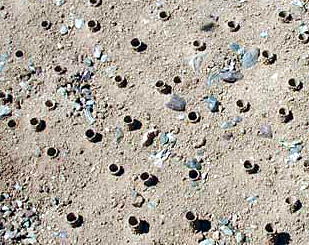
All use of insecticides should be eliminated in these areas. Alkali
Bee Nesting Sites (Photo)
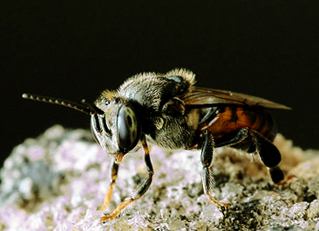
Studies by Dr. George E. Bohart of
the U. S. Dept. of Agriculture have uncovered many attributes of wild alkali
bees for pollination in the Western North America especially. Recommendations for their establishment
indicate a climate with low rainfall and a mineral type soil that is structureless
(sandy or clay). Favorable terrains
are hammocks, low ridges and gentle slopes where water will never remain on
the ground surface. Subsurface
features are a hard pan or one where there is natural artesian pressure. In some cases one can locate an area that
receives sub irrigation from the surface water given to irrigated crops at a
higher level. But these may be
difficult to maintain in a stable condition.
The site should be close to the fields where crops occur unless there
is no interference with other fields nearby.
In large fields there should be several nesting sites located around
it. Alkali bees forage the closest
flowers first and then gradually spread away. Removing vegetation or at least
thinning it out to a scattered pattern should begin preparation of nesting
sites. Surface drainage can be
controlled in low-lying areas by grading the surface into a series of low
ridges. It must be protected from
flood irrigation and natural high water from streams. Soil moisture needs to be sub irrigated in
order to maintain the soil in a moist condition up to the surface beginning
in early summer and extending into autumn.
Moisture needs to be present at a depth of 5-10 inches. If a hard pan
is already present, one needs to put in a series of parallel ditches to
grade, spaced so that areas between will be completely seeped after a few
days of funning a light stream through the ditches. If a hard pan is lacking one can be created by scraping off
16-18 inches of soil and packing subsoil with heavy equipment. A clay layer will give a better
result. Vegetation should be kept at
a minimum because it uses up moisture. The maintenance of sites is very
important. Dense weed growth should
be prevented. Sub-irrigation is often
required to maintain the proper moisture conditions. Efforts should be made to have sufficient
moisture at the surface during the nesting season to prevent the formation of
a hard alkaline crust or a dry, powdery layer under a thin crust of black
alkali. It may be necessary to scrape
off the alkali at the surface from early to late summer. The site should never be allowed to hold
standing water. Livestock may roam
the site, but avoid excessive trampling especially if the surface tends to
become dry: fence the area if
necessary. Skunks and badgers dig up
the larvae at all times of the year and may even catch adults. They are easily trapped or poisoned. Bee flies that hover over the burrows with
outstretched wings throw eggs into the nest entrances and the maggots destroy
many alkali bee larvae. Efforts to
control them are essential. The more nesting sites there are
the better. Alkali bees migrate and
it is best to try to keep them near desired fields. Two or three unoccupied sites nearby will aid in their
remaining in the area. Alkali bees may be established by
natural migration if the fields are within 1-2 miles of existing sites. Bees may also be moved to a site. Alkali bee larvae can be used for
short-range moves. Blocks of soil
from existing sites may be transplanted.
Steel cylinders can be driven into the ground and the contained soil
moved. Adults can be captured with a
sweep net as they emerge from an existing site. From the net the bees can be emptied into paper sacks and
placed in a cool, damp container.
They can be released in the late afternoon on the proposed nesting
sites. |