File: <mecoptera.htm> Indexes: < (Entomology),
(Invertebrates), (General Index)> <Invertebrate
Bibliography> <Glossary> <Site Description> < Home>
|
Entomology: MECOPTERA
1 Kingdom: Animalia, Phylum: Arthropoda Subphylum: Hexapoda: Class: Insecta: Order: Mecoptera (Contact) Please CLICK on underlined
categories to view and on included illustrations to enlarge: Depress
Ctrl/F to search for subject matter:
Mecoptera -- <Adults>
& <Juveniles>
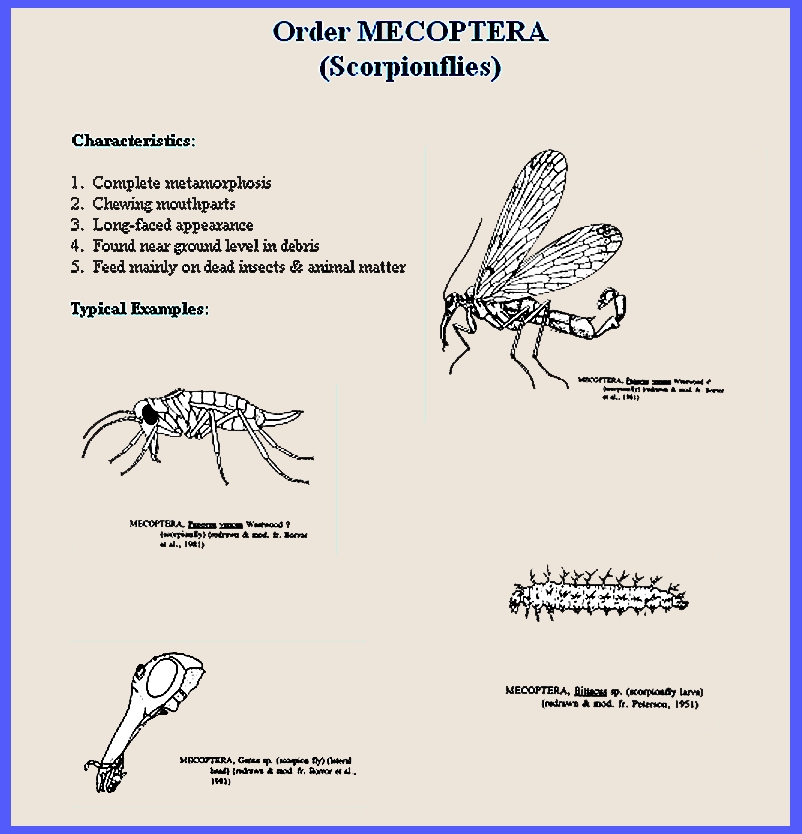
-- are the "scorpion flies" a small order of insects that may be
recognized by their vertically directed and elongated head capsule that has
the biting mouthparts at its end. DNA
evidence shows a close relationship to the Siphonaptera (fleas). They have
two pairs of similar wings with simple venation in which a number of cross
veins divide the whole area into a number of almost equal rhomboidal
cells. Metamorphosis is complete.
------------------------------------------ The head is elongated and held in
a vertical position. The clypeus is
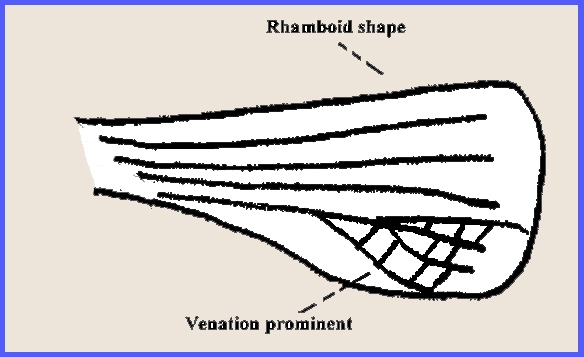
also elongated. Wing venation is more
prominent in a definite section of the wing, which is of rhomboid shape.
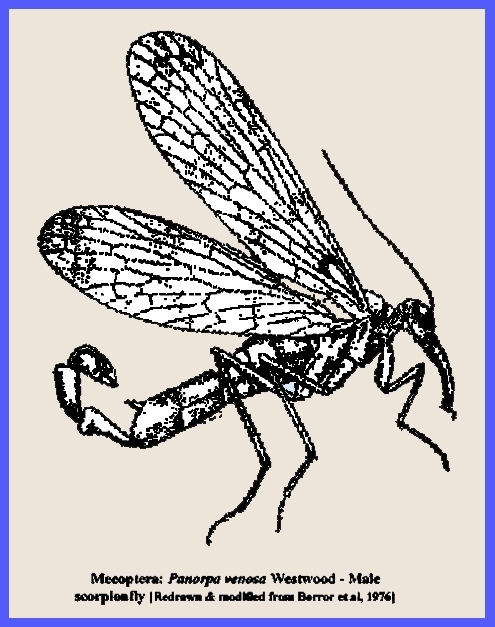
The abdomen is cured in the male
and held as a scorpion's sting, from which the name "scorpion fly"
is derived. The larvae are eruciform and there
are about 2 ocelli on either side of the head. Adults have the characteristic habit of hanging, but they are
not very strong fliers. ------------------------------------------ Five common families of Mecoptera are distinguished
according to their shapes and habits as follows (see Borror et al. 1989 for
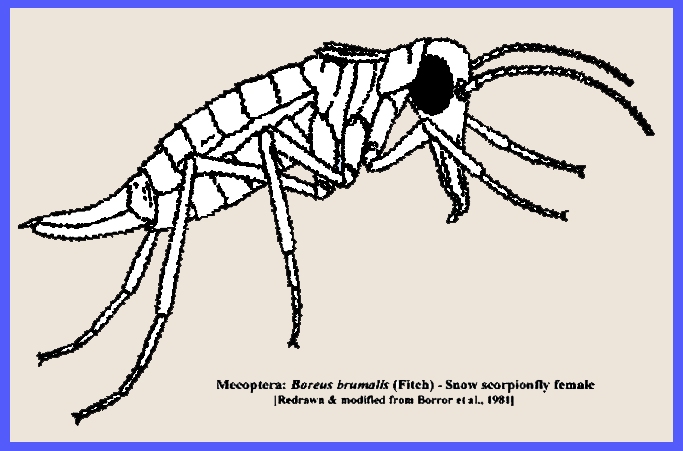
details): Boreidae. -- Snow scorpion flies occur
in moss and on snow in winter. Meropeidae. -- Earwig flies are so
named because the male has a pair of long forceps like claspers at the apex
of the abdomen. Panorpidae. -- Common scorpion
flies. Panorpodidae. -- Short faced scorpion
flies. Bittacidae. -- Hanging scorpion
flies.
============== |