FILE: <ch-74.htm> GENERAL INDEX {also
see <bc-37.htm>] [Navigate
to MAIN MENU ]
BIOLOGICAL CONTROL OF MOSQUITOES
Culex , Aedes, Anopheles, etc. -- Diptera, Culicidae (Contacts) -----Please CLICK on desired category; Depress Ctrl/F to find Subject Matter: Detailed
Biological Control Measures GO TO ALL: Bio-Control Cases [Please refer also to Related Research #1, #2, #3
] Introduction
Interest in
biological control of medical pests and vectors had its modest beginning
prior to the turn of the last century (Lamborn 1890). At that time the possible use of
dragonflies as natural enemies for the control of mosquitoes was clearly
recognized. However, as is true even
today, the enormous difficulties associated with the colonization and
management of these insects quickly extinguished any idea for the practical
use of these predators for mosquito control.
Shortly after the turn of the century the mosquitofish, Gambusia affinis (Baird & Girard), came to the forefront of
biological control. This small fish,
being much easier to deal with than dragonflies, was quickly utilized and
transported throughout the world during the early decades of this century in
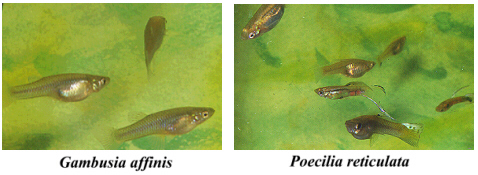
attempts to control mosquitoes. The Mosquitofish, G.
affinis, <PHOTO> along with
several other natural controls, was employed with some enthusiasm during the
first 40 years of the century. All of
these control measures were curtailed sharply with the introduction of
synthetic organic insecticides after World War II. The convenience and quick killing power of these chemicals was
so dramatic for such insects as mosquitoes, flies and lice, that other
control tactics were quickly reduced to a minor role. Nevertheless, interest in alternative methods
of control, especially biological, was to arise again when the succession of
chemicals developed during the 1940s and 1950s began to fail due to the
development of widespread genetic resistance in vector and pest
populations. Although the biological
control of medically important pests and vectors has made some progress since
its revival, it has been rather slow and is still well behind that which has
occurred in agricultural systems (Service 1983). This disparity is partly due to the problems of fixing pest
tolerance levels, but more importantly because of the temporary unstable
habitats exploited by medically important pests (Legner & Sjogren 1984,
Legner & Warkentin 1989). As Service (1983) pointed out, the successful
widespread use of biological control agents against mosquitoes will require a
much better understanding of the ecology of predator/prey and pathogen/host
relationships. The opportunistic
characteristics of many species (i.e., their ability to exploit temporary
habitats, coupled with their short generation time, high natural mortality,
great dispersal potential, and other R-strategist characteristics) pose
difficult problems for any biotic regulatory mechanism. Mosquitoes, in general, exploit a wide
breadth of different aquatic habitats.
Consequently, under many conditions a biological control agent will
have a much narrower range of environmental activity than that of the target
species. Thus, in many situations a
number of different biological control agents and/or appropriate methods will
be necessary if we expect to control even a single species of mosquito across
its range of exploitable breeding sources. Studies on the
fungal genus Lagenidium,
which is capable of infecting and killing several genera of mosquito larvae
(e.g., Anopheles, Culex, Aedes, and Psorophora), encourages the continued quest for
biological control agents as alternatives to pesticides (McCray et al. 1973,
Christensen et al. 1977, Glenn & Chapman 1978, Washino & Fukushima 1978, Washino 1981, Axtell et al. 1982,
Domnas et al. 1982, Jaronski & Axtell 1982, 1983a,b). The potential of such fungi for
operational mosquito control is nevertheless no greater than for some of the
flatworms or hydra. This recent
switch in attention to fungi is probably due to the existence of a greater
number of mycologists in the research force than specialists in the other
groups. Problems of mass production,
dissemination of an acceptable fungal stage and adaptability to polluted
water habitats have placed their immediate deployment in doubt. Similar problems were either nonexistent
or minimal with the Dugesia
flatworms, so that their integrity as effective and available biological
control agents is undiminished. The successful
widespread use of biological control agents against mosquitoes will require a
much better understanding of the ecology of predator/prey and pathogen/host
relationships (Service 1983). The
opportunistic characteristics of many species (i.e., their ability to exploit
temporary habitats, coupled with their short generation time, high natural
mortality, great dispersal potential, and other R-strategist characteristics)
pose difficult problems for any biological control agent. Mosquitoes typically exploit many aquatic
habitats. Often a biological control
agent will have a much narrower range of environmental activity than the
target species. Thus, in many
situations a number of different biological control agents and/or appropriate
methods will be necessary to control even one species of mosquito across its
range of exploitable breeding sources. Detailed Biological Control Measures
Fish.--Several
species of fishes are used for the biological control of mosquitoes, and
these species together form the major successes in biological control. Unfortunately, their usefulness is limited
to more permanent bodies of water, and even under these situations their
impact on the target species has been only partially successful. Bay et al (1976) point out that many species
of fish consume mosquito larvae, but only a few species have been manipulated
to manage mosquito populations.
[Please see Research] The mosquitofish, G. affinis, <PHOTO> is the best-known agent for mosquito control. This fish, which is native to the
southeastern United States, eastern Mexico and the Caribbean area, was first
used as an introduced agent for mosquito control when it was transported from
North Carolina to New Jersey in 1905 (Lloyd 1987). Shortly thereafter it was introduced to the Hawaiian Islands to
control mosquitoes which had been introduced during the 19th century. During the next 70 years, the mosquitofish
was transported to over 50 countries and today stands as the most widely
disseminated biological control agent (Bay 1969, Lloyd 1987). Many of these introductions were aimed at Anopheles species that were
transmitting malaria. Hackett (1937)
described its usefulness in malaria control programs in Europe. He commented that its effects were not
sufficient by themselves, but that the fish had a definite impact on the
suppression of the disease.
Tabibzadeh et al. (1970) reported a rather
extensive release program in Iran and concluded that the fish was an
important component in malaria eradication.
Sasa and Kurihara (1981) and Service (1983) believed that the fish had
little impact on the disease and that most evidence is circumstantial. Gambusia
no longer is recommended by the World Health Organization for malaria control
programs, primarily because of its harmful impact on indigenous species of
fish (Service 1983, Lloyd 1987). The biological
attributes of G. affinis, namely a high
reproductive capability, high survivorship, small size, omnivorous foraging
in shallow water, relatively high tolerance to variations in temperature,
salinity and organic waste, would seemingly make this species an excellent
biological control agent (Bay et
al. 1976, Moyle 1976). However, whether this fish leads to effective
mosquito control at practical costs in many situations is still debated. Kligler's (1930) statement that "...
their usefulness as larvae-destroyers under local conditions where vegetation
is abundant and micro fauna rich enough to supply their needs without great
trouble, is limited. In moderately
clear canals, on the other hand, or in pools having a limited food supply,
they yielded excellent results ..." is probably one of the most
accurate. In California this
fish had been used extensively for control of mosquitoes in various habitats
(Bay et al. 1976). Many
mosquito abatement districts in the State have developed systems for
culturing, harvesting and winter storage of the mosquito fish to have enough
available for planting early in the spring (Coykendall 1980). This is particularly important in the rice
growing areas of California where early stocking appears to be of critical
importance for build-up of fish populations to control mosquitoes during late
summer. The results of the use of G. affinis in California rice fields will be summarized below
as an illustrative example of the mixed successes achieved in the field. Rice cultivation in
California continuously poses one of the most difficult control problems for Anopheles and Culex species. Hoy & Reed (1970) showed that good to
very good control of Culex tarsalis Coquillett could be
achieved at stocking rates of about 480 or more females per hectare, and
Stewart et al (1983) reported excellent control with a similar stocking rate against
this species in the San Joaquin Valley. Although Cx. tarsalis appears to be controlled effectively by G. affinis, the control of its frequent companion in northern
California rice fields, Anopheles
freeborni Aitken, is less
apparent. Hoy et al. (1971)
showed a reduction of An. freeborni populations at
various stocking rates of about 120 to 720 fish per hectare, but the
reduction was not nearly as striking as for Cx. tarsalis. These workers surmised that improvement in
control could be achieved by earlier season stocking, possibly multiple
release points in fields and a reliable source of healthy fish for
stocking. Despite an extensive
research effort in mass culture, management and storage for G. affinis by the State of California (Hoy & Reed 1971),
a mass production method has not been satisfactorily achieved (Downs et al. 1986, Cech and Linden 1987). Studies of G. affinis for control of mosquitoes in wild rice show that
relatively high stocking rates can effectively reduce An. freeborni
and Cx. tarsalis populations within a three-month period (Kramer et al. 1987a). The
commercial production of wild rice, which is a more robust and toller plant
than white rice and requires only 90 instead of 150 days to mature, has been
increasing over the last few years in California (Kramer et al.
1987). In the above study, stocking
rates of 1.7 Kg/ha (ca. 2400 fish/Kg) released in 1/10 ha wild rice plots
failed to show a significant difference in reduction of mosquitoes from plots
with no fish. A decrease in numbers
of larvae was noted just prior to harvest which suggested that the fish were
beginning to have an impact on mosquito numbers (Kramer et al.
1987). Numbers of fish in these
plots, based on recovery after drainage, was about 100,000 individuals per
hectare (ca. 32 Kg/ha) or a density of about 10 fish per square meter. However, significant control was not
achieved. During 1987 this
study was repeated at the rates of 1.7 and 3.4 Kg/ha of fish. Results showed an average suppression of
larvae (primarily An. freeborni) of <1 and 0.5 per
dip for the low and high rate respectively, compared to control plots which
averaged >4.5 per dip. Fish
densities in the 1987 study surpassed those of 1986 by about two fold at the
1.7 Kg/ha rate and three fold at the 3.4 Kg/ha rate. It is believed that these greater fish
numbers accounted for the control differences observed in the second year,
although mosquitoes were not eliminated.
Differences between test plots and control plots were first observed
eight weeks after the fish had been planted and mosquitoes remained under
control until drainage of the fields (Kramer et al.
1988). Davey & Meisch
(1977a,b) showed that the mosquitofish at inundative release rates of 4,800
fish per hectare, was effective for control of Psorophora columbiae
(Dyar & Knab) in Arkansas rice fields.
Fish released at the water flow inlets dispersed quickly throughout
the fields. This is an important
attribute for controlling species of Psorophora
and Aedes, whose hatch and
larval development are completed within a few days. A combination of 1,200 G.
affinis and about 300
sunfish (Lepomis cyanellus Rafinesque) gave
better control than either four times the amount of G. affinis
or L. cyanellus used separately. This synergistic effect reduces logistic problems associated
with having enough fish available at the times fields are inundated. Blaustein (1986) found enhanced control of
An. freeborni by mosquitofish in California rice fields after
the addition of green sunfish. He
speculated that the increased control was the result of the mosquitofish
spending more time in protected areas where mosquitoes were more abundant and
the green sunfish was avoided. The
availability of fish for stocking fields either inundatively, such as in
Arkansas or for control later in the season as practiced in California, has
been a fundamental reason why fish have not been used more extensively in
rice fields. A unique use of the
mosquitofish by inundative release was reported by Farley & Caton
(1982). The fish were released in
subterranean urban storm drains to control Culex quinquefasciatus
Say breeding in entrapped water at low points in the system. Fish releases were made following the last
major rains to avoid having them flushed out of the system. Fish survived for more than three months
during the summer and were found throughout the system. Gravid females produced progeny. However, no mating occurred, and after the
initial increase in numbers populations of fish diminished as summer
progressed. Reductions of mosquitoes
from 75 to 94% were observed for three months compared to untreated areas
(Mulligan et al. 1983). This control practice is now conducted on
a routine basis by the Fresno Mosquito Abatement District (J. R. Caton 1987,
pers. comm.). Although G. affinis has been useful for control of mosquitoes in a
number of situations, clearly there are drawbacks to its use. In fact, if today's environmental
awareness existed at the turn of the century, this fish probably never would
have been intentionally introduced into exotic areas (Pelzman 1975, Lloyd
1987). The major objection to this
fish has been its direct impact on native fishes through predation, or its
indirect impact through competition (Bay et
al. 1976, Schoenherr 1981,
Lloyd 1987). More than 30 species of
native fish have been adversely affected by the introduction of Gambusia (Schoenherr 1981,
Lloyd 1987). Gambusia, a general predator, can also substantially
reduce zooplankton and thus lead to algal blooms in certain situations
(Hurlbert et al. 1972). Introductions of Gambusia have also reduced numbers of other aquatic
invertebrates coinhabiting the same waters (Hoy et al.
1972, Farley & Younce 1977, Rees 1979, Walters & Legner 1980,
Hurlbert & Mulla 1981). In
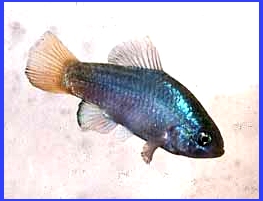
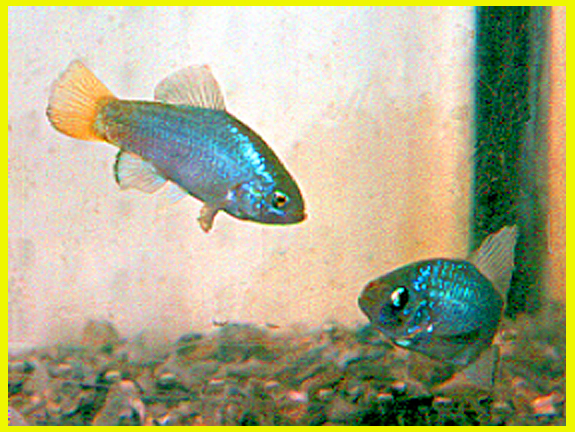
California where native pup fishes in the genus Cyprinodon (PHOTO-1, #2 ) may afford a greater potential for mosquito
control under a wider range of environmental stresses than Gambusia (Walters & Legner 1980), the California
Department of Fish and Game has discouraged their use on the basis that
unknown harmful effects might result to other indigenous fishes. There is
also the concern that certain rare species of Cyprinodon might be lost through hybridization. The next most widely used fish for
mosquito control is the common guppy, Poecilia
reticulata (Peters) <PHOTO>.
It has been deployed successfully in Asia for the control of waste
water mosquitoes, especially Cx.
quinquefasciatus. Like its poeciliid relative Gambusia, it is native to the
Americas (tropical South America).
But, rather than being intentionally introduced to control mosquitoes,
it was taken to other parts of the world by tropical fish fanciers. Sasa et al. (1965) observed wild populations of this fish breeding in drains in
Bangkok and concluded from their observations that it was controlling
mosquitoes common to that habitat.
The practical use of guppies is primarily restricted to subtropical
climates because of an inability to tolerate temperate-zone water
temperatures (Sasa & Kurihara 1981).
However, their most important attribute is a tolerance to relatively
high levels of organic pollutants, which makes them ideal for urban water
sources that are rich in organic wastes.
In Sri Lanka, wild populations have been harvested and used for the
control of mosquitoes in abandoned wells, coconut husk pits and other sources
rich in organics (Sasa & Kurihara 1981).
The fish occursin in India, Indonesia and China and has been intentionally
introduced for filariasis control into Burma (Sasa & Kurihara 1981). Mian et al (1985) evaluated its use for
control of mosquitoes in sewage treatment facilities in southern California
and concluded that guppies showed great potential for mosquito control in
these situations. Exotic fish have also been used for
clearing aquatic vegetation from waterways which has resulted in excellent
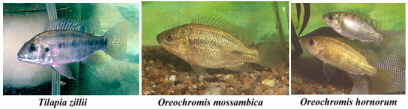
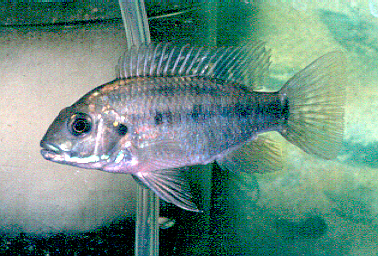
mosquito control. In the irrigation
systems of southeastern California, three species of subtropical cichlids, Tilapia zillii (Gervais), Oreochromis
mossambica (Peters) and Oreochromis
hornorum (Trewazas) <PHOTO> were introduced and have become
established over some 2,000 ha of Cx.
tarsalis breeding habitat
(Legner & Sjogren 1984). In
this situation, mosquito populations are under control by a combination of
direct predation and the consumption of aquatic plants by these omnivorous
fishes (Legner & Medved 1973, Legner 1978a, 1983; Legner & Fisher 1980; Legner & Murray 1981, Legner & Pelsue 1983). As Legner
& Sjogren (1984) indicate, this is a unique example of
persistent biological control and probably only applicable for relatively
sophisticated irrigations systems where a permanent water supply is assured,
and water conditions are suitable to support the fish (Legner et al. 1980).
There is a three-fold advantage in the use of these fish: (1) clearing of vegetation to keep
waterways open, (2) mosquito control and (3) a fish large enough to be caught
for human consumption. Some
sophistication is necessary when stocking these cichlids for aquatic weed
control, which is often not understood by irrigation districts personnel
(Hauser et al. 1976, 1977; Legner 1978b).
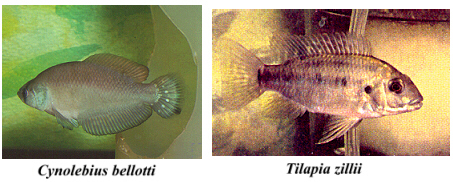
Otherwise competitive displacement may eliminate T. zillii,
<PHOTO> the most efficient weed consuming species
(Legner 1986). Household storage of water in open
containers has frequently been the cause for outbreaks of human disease
transmitted by Aedes aegypti (Linnaeus) in less
developed parts of the world. While
conducting Ae. aegypti surveys in Malaysia
during the mid 1960s, Dr. Richard Garcia of UC Berkeley observed what were
apparently P. reticulata being utilized by
town residents for the control of mosquitoes in bath and drinking water
storage containers. The origin of
this control technique was not clear but it appeared to be a custom brought
to the area by Chinese immigrants.
Not all residents used fish, but those that did had no breeding
populations of Ae. aegypti. Neng (1987) reported on the use of a
catfish, Claris sp., for the
control of Ae. aegypti in water storage tanks
in coastal villages of southern China.
This fish was considered appropriate since it was indigenous, edible,
consumed large numbers of mosquito larvae, had a high tolerance for adverse
conditions and could be obtained from the local markets. One fish was placed in each water source
and later checked for its presence by larval survey teams about every 10 to
15 days. If fish were not found on
inspection the occupant was told to replace the fish or be fined. The investigation was conducted from 1981
to 1985, and surveys over this period showed a sharp initial reduction in Ae. aegypti followed by a low occurrence of the mosquito over
the four-year study period. Outbreaks
of dengue were observed in neighboring provinces during this period, but not
in the fishing villages under observation.
The cost of the program was estimated to be about 1/15 that of indoor
house spraying (Neng 1987). Alio et al. (1985) described another use of a local species of fish for the
control of a malaria vector similar to the method reported by Kligler
(1930). Oreochromis sp., a tilapine, was introduced into
human-made water catchment basins called "barkits" in the semi arid
region of northern Somalia. These
small scattered impoundments served as the only sources of water during the
dry season for the large pastoral population of the area. Anopheles
arabiensis Patton, the
vector of malaria in that area, is essentially restricted to these
sites. Release of fish into the
"barkits" dramatically reduced both the vector and nonvector
populations of mosquitoes rather quickly.
Treatment of the human population with antimalarial drugs during the
initial phase of this two-year study, combined with the lower vector
population reduced the transmission rate of malaria to insignificance over a
21 month period whereas the control villages remained above 10 percent. Alio et al (1985) commented that the local
population also recognized the added benefits of reduced vegetation and
insects in the water sources. This
resulted in community cooperation and was expected to further benefit the
control strategy by providing assistance in fish distribution and maintenance
as the program expanded to other areas.
The last two examples involve the use
of indigenous over exotic fish where feasible in vector control
programs. There are other examples
where native fishes have been used in specialized circumstances (Kligler 1930,
Legner et al. 1974, Menon & Rajagopalan 1978, Walters &
Legner 1980 , Ataur-Rahim 1981 and Luh 1981). Lloyd (1987) argued that only indigenous fish should be
employed for mosquito control because of the environmental disruption induced
by exotics such as G. affinis. However, he suggested that native fish
should be analyzed carefully for prey selectivity, reproductive potential and
effectiveness in suppression pest populations before attempting their
use. Lloyd (1987) also pointed out
that a multidisciplinary approach involving fisheries biologists and
entomologists should be employed when developing indigenous fish for mosquito
control. However, in California where
native pup fishes in the genus Cyprinodon
<PHOTO> may afford a
greater potential for mosquito control under a wider range of environmental
stresses than Gambusia
(Walters & Legner 1980 ),
the California Department of Fish and Game discourages their use on the basis
that unknown harmful effects might result to other indigenous fishes. There is also the concern that certain
rare species of Cyprinodon
might be lost through hybridization. Perhaps China's
example of a multipurpose use of native fish for mosquito control and a human
protein source is the most resourceful strategy. This application for mosquito control is not new. Kligler (1930) used a tilapine fish to
control Anopheles sp. in citrus
irrigation systems in old Palestine, where farmers cared for the fish,
consuming the larger ones. According
to Luh (1981), the culture of edible fish for the purpose of mosquito control
and human food is not widely encouraged in China. The old Chinese peasant custom of raising edible fish in rice
fields has received greater attention in recent times because of the benefits
made possible through this practice.
The common carp, Cyprinus
carpio Linnaeus, and the grass carp, Ctenopharygodon idella
Valenciennes, are most commonly used.
Fish are released as fry at the time rice seedlings are planted. Fields are specially prepared with a
central "fish pit" and radiating ditches for refuge when water
levels are low. Pisciculture in rice
fields, as noted by Luh (1981), has three major benefits: (1) a significant reduction in culicine
and to a lesser extent anopheline larvae, (2) fish are harvested as food and
(3) rice yields are increased apparently by a reduction in competitors and
possibly by fertilization of the plants by fish excreta. Another group of
fishes, the so-called "instant" or annual fishes, (Cyprinodontidae), which are native to South
America and Africa, have been considered as possible biological control
agents for mosquitoes (Vanderplant 1941, 1967; Hildemann & Wolford 1963;
Bay 1965, 1972; Markofsky & Matias 1979). The relatively drought resistant eggs of these cyprinodontids,
which allows them to utilize temporary water sources as habitat, would seem
to make them ideal candidates for mosquito control. There is also some evidence that they do impact mosquito
populations in native areas (Vanderplant 1941, Hildemann & Wolford 1963,
Markofsky & Matias 1979).
Research on the biology and ecology of several species has been
conducted; however, there are no published accounts on the successful use of
these fish in field situations. In
California the South American species Cynolebias
nigripinnis Regan and Cynolebias bellottii (Steindachner) <PHOTO>, survived the summer in rice fields, but no
reproduction was observed over a three-year period (Coykendall 1980). It was speculated that they may play a
future role in California's mosquito control program in temporary pools and
possibly rice fields. C. bellottii was observed to reproduce repeatedly and to
persist in small intermittently dried ponds in Riverside, California for
eleven consecutive years, 1968-1979 (Legner & Walters unpubl.). Four drying flooding operations over two
months were required to eliminate this species from ponds that were to be
used for native fish studies (Walters & Legner 1980 ). It
seems logical, given the biological capability of surviving an annual dry
period, that these fish could be successfully integrated into mosquito
control programs, especially in newly created sources in geographic areas
where they naturally occur (Vaz-Ferreira et
al. 1963, Anon 1981, and
Geberich 1985).
Arthropods.--Numerous
species of predatory arthropods have been observed preying on mosquitoes, and
in some cases are believed to be important in controlling mosquitos (James
1964, Service 1977, Collins & Washino 1979, McDonald & Buchanan
1981). However, among the several
hundred predatory species observed, only a few have been used in a
manipulative way to control mosquitoes.
Dragonflies, sometimes referred to as mosquito hawks, were one of the
first arthropods to be examined.
Difficulties in colonization, production and handling have restricted
their use to experimental observation.
It is unlikely that they will ever be used extensively (Lamborn 1890,
Beesley 1974, El Rayah 1975, Riviere et
al. 1987a). There are a few
cases where the difficulties associated with the manipulative use of
arthropods have been at least partly overcome. More than 50 years ago, in a classic use of biological control,
the mosquito Toxorhynchites,
whose larvae are predators of other mosquitoes, was released on several
Pacific Islands in an effort to control natural and artificial container
breeding mosquitoes such as Ae.
aegypti and Aedes albopictus (Skuse) (Paine 1934, Bonnet & Hu 1951,
Petersen 1956). The releases were not
considered successful, but the mosquitoes did establish in some areas
(Steffan 1975). Several reasons to
explain why these releases failed were low egg production, lack of synchrony
between predator and prey life cycles, and selection of only a relatively
small number of prey breeding sites (Muspratt 1951, Nakagawa 1963, Trpis
1973, Bay 1974, Riviere 1985). Although not
apparently a suitable predator in the classical sense, there is still
interest in the use of various Toxorhynchites spp. for inundative release (Gerbert
& Visser 1978). Trpis (1981)
working with Toxorhynchites brevipalpis (Theobald) showed
that the high daily consumption rate and long survival of the larvae without
prey made it a prime candidate for biological control use. Observations on adult females indicated a
50% survivorship over a 10-week period with a relatively high oviposition
rate per female. All the above
attributes suggest that this species would be useful for inundative release
programs against container breeding mosquitoes. Studies by Focks et al (1979) in Florida, working with Toxorhynchites rutilis rutilis Coquillett, showed that this species had a high
success rate in artificial breeding containers. In a 12.6 hectare residential area, about 70% of the available
oviposition sites were located over a 14-day period by two releases of 175
females. Mass culturing techniques
have been developed for this species and Toxorhynchites
amboinensis (Doleschall)
(Focks & Boston 1979, Riviere et
al. 1987b). Focks et al (1986),
working with Toxorhynchites amboinensis, reported that
release of 100 females per block for several weeks, combined with ultra low
volume application of malathion, reduced Ae.
aegypti populations by about
96% in a residential area of New Orleans.
The Toxorhynchites
releases and not the insecticide treatment apparently accounted for most of
the reduction. These workers noted
that reducing both the number of predators and malathion applications without
lowering efficacy could further refine the procedure. Mosquitoes such as Ae. aegypti
and Ae. albopictus, which breed in and whose eggs are dispersed
via artificial containers, pose major health hazards as vectors of human
diseases throughout much of the warmer climates of the world. The massive quantities of containerized
products and rubber tires which are then discarded without care or stockpiled,
have given these mosquito species a tremendous ecological advantage. The recent establishment and extensive
spread of Ae. albopictus in the United States
underlines this point (Sprenger & Wuithironyagool 1986). The apparent inability of governments to
appropriately control disposal of these containers and difficulties in
location once they are discarded makes inundative releases of Toxorhynchites, either alone or
in combination with other control tactics, a much more plausible approach
(Focks et al. 1986, Riviere et al. 1987a). Notonectids are voracious predators of mosquito larvae
under experimental conditions (Ellis & Borden 1970, Garcia et al. 1974, Hazelrig 1974), and in waterfowl refuges in
California's Central Valley (Legner & Sjogren, unpub. data). Notonecta
undulata Say and Notonecta unifasciata Guerin have been colonized in the
laboratory. In addition, collection
of large numbers of eggs, nymphs and adults is feasible from such breeding
sites as sewage oxidation ponds (Ellis & Borden 1969, Garcia 1973,
Hazelrig 1975, Sjogren & Legner 1974, Muira 1986). Some studies have been conducted on
storage of eggs at low temperatures, but viability decreased rapidly with
time (Sjogren & Legner 1989). At present, the most feasible use of these predators appears to
lie in the recovery of eggs from wild populations on artificial oviposition
materials and their redistribution to mosquito breeding sites. Such investigations were carried out in
central California rice fields by Miura (1986). Floating vegetation such as algal mats and sometimes duck weed
(Lemna spp.) form protective
refugia for mosquito larvae, and consequently populations of mosquitoes can
be high in the presence of notonectids (Garcia et al.
1974). It appears that colonization
and mass production costs, coupled with the logistics of distribution,
handling and timing of release at the appropriate breeding site, are almost
insurmountable problems for routine use of notonectids in mosquito control. In addition to
insect predators, several crustaceans feed on mosquito larvae. Among these are the tadpole
shrimp, Triops
longicaudatus (LeConte), and
several copepod species. Mulla et al. (1986) and Tietze
& Mulla (1987), investigating the tadpole shrimp, showed that it was an
effective predator under laboratory conditions and speculated that it may
play an important role in the field against flood water Aedes and Psorophora
species in southern California.
Drought resistance in predator eggs is an appealing attribute for egg
production, storage and manipulationin field situations against these
mosquitoes. However, synchrony in
hatch and development between the predator and the prey is crucial if this is
to be a successful biological control agent for the rapidly developing Aedes and Psorophora spp. In
addition, the tadpole shrimp is considered an important pest in commercial
rice fields. Miura &
Takahashi (1985) reported that Cyclops vernalis
Fisher was an effective predator on early instar Cx. tarsalis
larvae in the laboratory. These
workers speculated that copepods could have an important role in suppressing
mosquito populations in rice fields because of their feeding behavior and
abundance. Another crustacean
that has shown promise for more extensive application is the cyclopoid
predator, Mesocyclops
aspericornis Daday (Riviere
et al. 1987b). This
work has shown reductions of Ae.
aegypti and Ae. polynesiensis Marks by more than 90% after inoculative
release of the organism into artificial containers, wells, treeholes and land
crab burrows. Although not able to
withstand desiccation, the rather small cyclopod predator has persisted
almost 2.5 years in crabholes and up to five years in wells, tires and
treeholes under subtropical conditions.
This species can be mass-produced, but its occurrence in large numbers
in local water sources allows for the inexpensive and widespread application
to mosquito breeding sites in Polynesia (Riviere et al.
1987a,b). The species is also very
tolerant of salinities greater than 50 parts per thousand. The benthic feeding behavior of Mesocyclops makes it an
effective predator of the bottom foraging Aedes,
but limits effectiveness against surface foraging mosquitoes. Riviere et al.
(1987a,b) believed that the effectiveness against Aedes is due to a combination of predation and competition
for food. Perhaps the greatest
utility of this Mesocyclops
will lie in the control of crabhole breeding species, such as Ae. polynesiensis in the South Pacific. Further investigations may uncover
additional cyclopods that can impact other mosquito species. The most important
nonarthropod invertebrate predators to draw attention for mosquito control
are the turbellarian flatworms and a coelenterate. Several flatworm species have been shown
to be excellent predators of mosquito larvae in a variety of aquatic habitats
(Legner & Medved 1974, Yu & Legner 1976,
Collins & Washino 1978, Case & Washino 1979, Legner 1977, 1979, Ali
& Mulla 1983, George et al. 1983). Several biological and ecological
attributes of flatworms would seem to make them ideal candidates for
manipulative use. Among them are ease
of mass production, an overwintering embryo, effective predatory behavior in
shallow waters with emergent vegetation, on site exponential reproduction
following inoculation (Medved & Legner 1974, Tsai & Legner 1977,
Legner & Tsai 1978, Legner 1979) and tolerance to environmental
contaminants (Levy & Miller 1978, Nelson 1979). Collins &
Washino (1978) and Case & Washino (1979) suggested that flatworms,
particularly Mesostoma,
may play an important role in the natural regulation of mosquitoes in some
California rice fields because of their densities and their predatory attack
on mosquito larvae in sentinel cages.
Preliminary analysis using extensive sampling showed a significant
negative correlation between the presence of flatworms and population levels
of Cx. tarsalis and An.
freeborni (Case &
Washino 1979). However, these workers
cautioned that an alternative hypothesis related to the ecology of these
species may have accounted for the correlations. Later investigations by Palchick & Washino (1984),
employing more restrictive sampling, were not able to confirm the
correlations between Mesostoma
and mosquito populations. However,
the enormity of the problem associated with sampling in California rice
fields, coupled with the complexity of the prey and predator interactions,
make further studies necessary before the role of this group of flatworms in
rice fields can be clearly established. The important
attributes for manipulative use of flatworms mentioned above raises the
question of why they have not been developed further for use in mosquito
control. Perhaps the contemporary
development of Bacillus
thuringiensis var. israelensis DeBarjac (H-14), a
highly selective easily applied microbial insecticide, may have been at least
partially responsible for slowing further work and development of these
predators. Their mass culture must be
continuous and demands skilled technical assistants (Legner & Tsai 1978). Their persistence in field habitats may
also depend on the presence of other organisms, such as ostracods, which can
be utilized for food during low mosquito abundance (Legner et al. 1976). The coelenterates,
like the flatworms, showed great promise for further development and use in
selected breeding habitats. Chlorohydra
viridissima (Pallas) is
efficient in suppressing culicine larvae in ponds with dense vegetation and
this species also can be mass produced (Lenhoff & Brown 1970, Yu et al. 1974a,b, 1975).
However, like the flatworms, work on these predators has waned,
perhaps for similar reasons as speculated for the flatworms. Microbial pesticides can be employed over
an extensive range of different mosquito breeding habitats. Also, commercial production of flatworms
and coelenterates would be much more costly, and storage of viable cultures
all but impossible.
Fungi.--The most
promising fungal pathogen is a highly selective and environmentally safe
oomycete, Lagenidium
giganteum Couch. First
tested for its pathogenicity to mosquitoes in the field by McCray et al. (1973), it is applied by aircraft to rice fields
(Kerwin & Washino 1987). Lagenidium develops asexually
and sexually in mosquito larvae, and is capable of recycling in standing
bodies of water. This creates the potential
for prolonged infection in overlapping generations of mosquitoes. Lagenidium
may also remain dormant after the water source has dried up and then become
active again when water returns. The
sexually produced oospore offers the most promising stage for commercial
production because of its resistance to desiccation and long-term
stability. However, problems in
production and activation of the oospores still remain (Axtell et al. 1982, Merriam & Axtell 1982a,b, 1983; Jaronski
& Axtell 1983a,b,c, Kerwin et
al. 1986, Kerwin &
Washino 1987). Field trials with the
sexual oospore and the asexual zoospore indicate that this mosquito pathogen
is near the goal of practical utilization.
Kerwin et al (1986) reports that the asynchronous germination of the oospore
is of particular advantage in breeding sources where larval populations of
mosquitoes are relatively low, but recruitment of mosquitoes is continuous
due to successive and overlapping generations, as in California rice fields. The germination of oospores over several
months provides long-term control for these continuous low level
populations. In addition, the asexual
zoospores arising from the oospore infected mosquito is available every two
to three days to respond in a density dependent manner to suppress any
resurging mosquito population. This
stage survives about 48 hours after emerging from the infected host.
Kerwin et al. (1986) indicate that laboratory fermentation
production of the asexual stage of Lagenidium
for controlling mosquitoes in the field is approaching the development
requirements and costs for the production of Bacillus thuringiensis
israelensis. A distinct advantage of this pathogen over
the Bacillus is its
potential to recycle through successive host generations. The disadvantage of the asexual stage is
that it is relatively fragile, cannot be dried and has a maximum storage life
of only eight weeks (Kerwin & Washino 1987). Thus, the focus of attention for commercial production is on
the oospore, which is resistant to desiccation and can be easily stored. Axtell & Guzman (1987) have recently
encapsulated both the sexual and asexual stages in calcium alginate and
reported activity against mosquito larvae after storage for up to 35 and 75
days, respectively. Further refinement
in techniques of production and encapsulation might make this approach a
viable option for future commercial production and application. Limitations on the
use of this pathogen include intolerance to polluted water, salinity and
other environmental factors (Jaronski & Axtell 1982, Lord & Roberts
1985, Kerwin & Washino 1987).
However, there are numerous mosquito breeding sources where these
limitations do not exist and therefore one would expect to see this selective
and persistent pathogen available for routine mosquito control in the near
future. The fungus Culicinomyces
clavosporus Couch, Romney
& Rao, first isolated from laboratory mosquito colonies and later from
field habitats, has been under research and development for more than a
decade (Sweeney et al. 1973, Couch et al. 1974, Russell et
al. 1979, Frances et al. 1985). The
fungus is active against a wide range of mosquito species and also causes
infections in other aquatic Diptera (Knight 1980, Sweeney 1981). The ease of production with relatively
inexpensive media in fermentation tanks is an extremely desirable trait. However, problems in storage must be
overcome if this fungus is to be widely used. Perhaps a drying process, now being investigated, will solve
storage requirements (Sweeney 1987).
Although the fungus has shown high infection rates in field trials,
dosage rates have been high and appreciable persistence at the site has not
been demonstrated (Sweeney et
al. 1973, Lacey & Undeen
1986, Sweeney 1983, 1987). Various species of Coelomomyces
have been studied over the last two decades for use in mosquito control. Natural epizootics with infection rates in
excess of 90% have been recorded.
These fungi persist in certain habitats for long periods; however,
factors triggering outbreaks in these situations are not well understood
(Chapman 1974). Some field-testing
has been done, but results have been highly variable (Federici 1981). In general, difficulties associated with
the complex life cycle of these fungi have encumbered research on them. Federici (1981) and Lacey & Undeen
(1986) have reviewed the potential of these fungi for mosquito control.
Nematodes.--Among
the various nematodes pathogenic for mosquitoes, Romanomermis culicivorax Ross & Smith,
has received the most attention (Petersen & Willis 1970, 1972a,b, 1975;
Brown et al. 1977, Brown & Platzer
1977, Poinar 1979, Petersen 1980a,b, Brown-Westerdahl et al.
1982, Kerwin & Washino 1984).
This mermithid, which is active against a wide range of mosquito
species, has been mass produced (Petersen & Willis 1972a) and utilized in
a number of field trials. The
nematode was commercially produced and sold under the name Skeeter Doom TMR,
but according to Service (1983) eggs showed reduced viability in transport
and the product currently is no longer sold.
However, the nematode's ability to recycle through multigenerations of
mosquitoes and overwinter in various habitats, including drained, harvested,
stubble-burned, cultivated and replanted rice fields, are strong attributes
favoring its further research and development for biological control
(Petersen & Willis 1975, Brown-Westerdahl et al.
1982). Several field applications
have shown good results and have included both the preparasitic stage and post
parasitic stages with the former more applicable to the "quick
kill" and the latter for more long-term continuous control such as in
California rice fields (Petersen et
al. 1978a,b, Levy et al. 1979, Brown-Westerdahl et al.
1982). Some drawbacks to its
widespread use include intolerance to low levels of salinity, polluted water
and low oxygen levels, predation by aquatic organisms and the potential for
development of resistance by the host (Petersen & Willis 1970, Brown
& Platzer 1977, Brown et
al. 1977, Petersen 1978,
Brown-Westerdahl 1982). However,
these environmental problems are not generally an issue for anopheline
control. For control of these species
the cost of in vivo mass production clearly
stands as the major drawback for this pathogen. Perhaps its most plausible use will be in specialized habitats
integrated with other control strategies (Brown-Westerdahl et al. 1982).
Bacteria.--The
spore forming bacterial pathogen, Bacillus
thuringiensis var. israelensis (H-14), was
isolated by Goldberg & Margalit (1977) and the produced toxin has been
shown by numerous studies to be an effective and environmentally sound
microbial insecticide against mosquitoes and blackflies. Its high degree of specificity and
toxicity, coupled with its relative ease of production, has made it the most
widely used microbial product to date for mosquito and blackfly control. Several formulations are currently
available from commercial firms throughout the world. Their efficacies under different
environmental conditions and problems associated with its use have been
reviewed by Garcia (1986, 1987) and Lacey & Undeen (1986). Another spore
forming bacterium, Bacillus sphaericus Neide, has also
shown great promise as a larvacide against certain mosquito species (Mulla et al. 1984). In
general, several strains of this pathogen show a much higher degree of toxic
variability among species of mosquitoes.
Culex spp. appear to
be highly susceptible, whereas other species such as Ae. aegypti
are highly refractory. Unlike the
ephemeral larvacidal activity of Bacillus
t. i. toxin, some strains of B. sphaericus
have shown persistence and apparent recycling in certain aquatic habitats
(DesRochers & Garcia 1984). For
further detail see the recent review by Lacey & Undeen (1986).
Protozoa.--A large
number of protozoa have been isolated from mosquitoes and other medically
important arthropods (Roberts et
al. 1983, Lacey & Undeen
1986). Of this assemblage the microsporidians have been studied rather
intensively. Due to their complex
life cycle and the in vivo production methods
necessary for maintaining them, research on their practical utility has been
limited. However, as Lacey &
Undeen (1986) point out, if more information is developed on their life
cycle, it may be found that they could play a role in suppressing mosquitoes
through inoculative and augmentive releases in certain habitats. Among the other
protozoa that show promise is the endoparasitic ciliate, Lambornella clarki Corliss & Coats, a
natural pathogen of the treehole mosquito, Aedes sierrensis
Ludlow. This pathogen has received
considerable attention over the last few years as a potential biological
control agent for container breeding mosquitoes (Egeter et al.
1986, Washburn & Anderson 1986).
Desiccation resistant cysts allow persistence of the ciliate from one
year to the next. Currently, in vitro production methods are being developed and small
field trials are being initiated to determine its efficacy and practicability
for field use (Anderson et al. 1986a,b).
Viruses.--Numerous
pathogenic viruses have been isolated from mosquitoes and blackflies. However, to date none look promising for
practical use in control (Lacey & Undeen 1986). For further detail
on biological mosquito control please refer to Reviews. REFERENCES: [Detailed = <medvet.ref.htm> ]
[Additional references may be
found at:
MELVYL
Library ] Ali, A.
& M. S. Mulla. 1983. Evaluation of the planarian, Dugesia dorotocephala, as a predator of chironomid midges and
mosquitoes in experimental ponds.
Mosquito News 43: 46-49. Axtell, R. C., S. T. Jaronski & T. L.
Merriam. 1982. Efficacy of the mosquito fungal pathogen, Lagenidium giganteum (Oomycetes: Lagenidiales). Proc. Calif. Mosq. Vector Control Assoc.
50: 41-2. Case, T. J. & R. K. Washino. 1979.
Flatworm control of mosquito larvae in rice fields. Science 206: 1412-14. Christensen, J. B., J. L. Fetter-Lasko, R. K.
Washino, R. C. Husbands & E. E. Kaufman.
1977. A preliminary field
study employing Lagenidium giganteum, a fungus, as a
possible biological control agent against the pasture mosquito Aedes nigromaculis.
Proc. Calif. Mosq. Vector Control Assoc. 45: 105. Collins, F. H. & R. K. Washino. 1978.
Microturbellarians as natural predators of mosquito larvae in northern
California rice fields. Proc. Calif.
Mosq. Vect. Contr. Assoc. 46: 91. Collins, F. H. & R. K. Washino. 1979.
Factors affecting the density of Culex
tarsalis and Anopheles freeborni in northern California rice fields. Proc. Calif. Mosq. Control Assoc. 47: 97-98. Domnas, A.
J., S. M. Fagan & S. T. Jaronski.
1982. Factors influencing
zoospore production in liquid cultures of the mosquito pathogen Lagenidium giganteum (Oomycetes:
Lagenidiales). Mycologia 75:
820-25. 1999 Garcia. R. & Legner, E. F.. 1999.
The biological control of medical and veterinary pests. In: Fisher, T. W. & T. S. Bellows, Jr.
(eds) Handbook of Biological Control:
Principles and Applications.
Academic Press, San Diego, CA. 1046 p. George, J. A.
1978. The potential of a local
planarian, Dugesia tigrina (Tricladida,
Turbellaria), for the control of mosquitoes in Ontario. Proc. Ent. Soc. Ont. 109: 65-9. George, J. A., B. A. L. Nagy & J. W.
Stewart. 1983. Efficacy of Dugesia tigrina
(Tricladida: Turbellaria) in reducing Culex
numbers in both field and laboratory.
Mosq. News 43: 281-87. Glenn, F. E. & H. E. Chapman. 1978.
A natural epizootic of the aquatic fungus Lagenidium giganteum
in the mosquito Culex territans. Mosq. News 38: 522-24. 158. Hauser, W. J., E. F. Legner, R. A. Medved & S. Platt. 1976.
Tilapia-- a management tool
for biological control of aquatic weeds and insects. Bull. Amer. Fisheries Soc. 1(2):
15-16. 160.
Hauser, W. J. & E. F. Legner. 1976. Simple, inexpensive
technique for tagging fish. The
Progressive Fish Culturist 38(1):
18-19. 168. Hauser, W. J., E. F. Legner & F. E.
Robinson. 1977. Biological control of aquatic weeds by
fish in irrigation channels. Proc.
Water
Management For Irrigation & Drainage. ASCE/Reno, Nevada, Jul. 20-22. pp. 139-145. Jaronski, S.
T. & R. C. Axtell. 1982. Effects of organic water pollution on the
infectivity of the fungus Lagenidium
giganteum (Oomycetes;
Lagenidiales) for mosquito larvae (Culex
quinquefasciatus): Field and
laboratory evaluation. J. Med. Ent.
19: 255-62. Jaronski, S.
T. & R. C. Axtell. 1983a. Effects of temperature on infection growth
and zoosporogenesis of Lagenidium
giganteum, a fungal pathogen
of mosquito larvae. Mosq. News
43: 42-5. Jaronski, S. T. & R. C. Axtell. 1983b.
Persistence of the mosquito fungal pathogen Lagenidium giganteum
(Oomycetes; Lagenidiales) after introduction into natural habitats. Mosquito News 43: 332-37. Jaronski, S. T., R. C. Axtell, S. M. Fagan
& A. J. Domnas. 1983. In vitro production of zoospores by the
mosquito pathogen Lagenidium
giganteum (Oomycetes: Lagenidiales)
on solid media. J. Invert. Path. 41:
305-09. Kenk, R. 1972.
Freshwater planarians (Turbellaria) of North America. Biota of freshwater ecosystems
identification Manual No. 1, Smithsonian Institution, Washington, D. C. 81 p. Lamborn, R. H.
1890. Dragon Flies vs.
Mosquitoes. D. Appleton Co., New
York. 202 p. Legner, E. F.
1977. Response of Culex
spp. larvae and their natural insect predators to two inoculation rates with Dugesia dorotocephala (Woodworth) in shallow ponds. Mosq. News 37: 435-40. 1984
Legner, E. F. & R. D. Sjogren. 1984.
Biological mosquito control furthered by advances in technology and
research. J. Amer. Mosq. Contr.
Assoc. 44(4):
449-456. 1974 Legner, E. F., R. D. Sjogren & I. M.
Hall. 1974.
The biological control of medically important arthropods. Critical Reviews in Environmental
Control 4(1): 85-113. 1975 Legner,
E. F., R. A. Medved & W. J. Hauser.
1975. Predation by the
desert pupfish, Cyprinodon macularius on Culex mosquitoes and
benthic chironomid midges. Entomophaga 20(1):
23-30. 1978a Legner, E.
F. 1978a.
Efforts to control Hydrilla verticillata Royle with herbivorous Tilapia zillii (Gervais) in Imperial County irrigation canals. Proc. Calif. Mosq. & Vector Contr.
Assoc., Inc. 46: 103-104. 1978b Legner, E. F. 1978b. Mass culture of Tilapia zillii [Cichlidae] in pond ecosystems. Entomophaga 23(1): 51-56. 1978c Legner, E. F. 1978. Part I: Parasites and predators introduced against
arthropod pests. Diptera. In: Introduced Parasites and Predators of
Arthropod Pests and Weeds: a World
Review (C. P. Clausen, ed.), pp. 335-39;
346-55. Agric. Handbk. No.
480, ARS, USDA, U. S.
Govt. Printing Off., Wash., D. C. 545 pp 1979 Legner, E. F. 1979. Advancements in the use of flatworms for
biological mosquito control. Proc.
Calif. Mosq. & Vector Contr. Assoc., Inc. 47: 42-43. 1973 Legner, E. F. & R. A. Medved. 1973.
Influence of Tilapia mossambica (Peters), T. zillii
(Gervais) (Cichlidae) and Mollienesia
latipinna LeSueur (Poeciliidae) on
pond populations of Culex mosquitoes
and chironomid midges. J. Amer. Mosq.
Contr. Assoc. 33(3):
354-364. 1974 Legner, E. F. & R. A. Medved. 1974.
Laboratory and small-scale field experiments with planaria
(Tricladida, Turbellaria) as biological mosquito control agents. Proc. Calif. Mosq. Contr. Assoc., Inc.
42: 79-80. 1984 Legner, E. F. & R. D. Sjogren. 1984.
Biological mosquito control furthered by advances in technology and
research. J. Amer. Mosq. Contr. Assoc. 44(4): 449-456. 1978 Legner, E. F. & S.-C. Tsai. 1978.
Increasing fission rate of the planarian mosquito predator, Dugesia dorotocephala, through biological filtration. Entomophaga
23(3): 293-298. 1990 Legner, E. F. & R. W. Warkentin. 1990.
Rationale for the desert pupfish, Cyprinodon
macularius, as a complement to Gambusia in mosquito control.
Calif. Mosq. & Vector Contr. Assoc., Inc. 57: 142-145. 1976
Legner, E. F., T.-C. Tsai & R. A.
Medved. 1976. Environmental stimulants to asexual
reproduction in the planarian, Dugesia
dorotocephala.
Entomophaga 21(4): 415-423. Lenhoff, M.
H. & R. D. Brown. 1970. Mass culture of hydra: improved method and application to other
invertebrates. Lab. Anim. 4: 139-54. Levy, R. & T. W. Miller, Jr. 1978.
Tolerance of the planarian Dugesia
dorotocephala to high concentrations
of pesticides and growth regulators.
Entomophaga 23: 31-34. McCray, E. M., D. J. Womeldorf, R. C. Husbands
and D. A. Eliason. 1973. Laboratory observations and field tests
with Lagenidium against
California mosquitoes. Proc. Calif.
Mosq. Control Assoc. 41: 123-28. Medved, R. A. & E. F. Legner. 1974.
Feeding and reproduction of the planarian, Dugesia dorotocephala
(Woodworth), in the presence of Culex
peus Speiser. Environ. Ent. 3: 637-41. Meyer, H. J. & L. W. Learned. 1981a.
Laboratory studies on the potential of Dugesia tigrina
for mosquito predation. Mosq. News
41: 760-64. Meyer, H. J. & L. W. Learned. 1981b.
A field test of the potential of a local flatworm, Dugesia tigrina, for biological control of mosquitoes in temporary
pools. North Dakota Farm Res.
39(2): 19-24. Nelson, F. R. S. 1979. Comparative
predatory potential and asexual reproduction of sectioned Dugesia dorotocephala as they relate to biological control of
mosquito vectors. Environ. Ent.
8: 679-81. Palchick, S. & R. K. Washino. 1984.
Factors affecting mosquito larval abundance in northern California
rice fields. Proc. Calif. Mosq.
Control Assoc. 52: 144-47. Service, M. W.
1983. Biological control of
mosquitoes--has it a future? Mosq.
News 43: 113-20. 1977
Tsai, S.-C. & E. F. Legner. 1977.
Exponential growth in culture of the planarian mosquito predator, Dugesia dorotocephala
(Woodworth). J. Amer. Mosq.
Contr. Assoc. 37(3):
474-478. 1980 Walters, L. L. & E. F. Legner. 1980.
Impact of the desert pupfish, Cyprinodon
macularius, and Gambusia affinis on fauna in pond
ecosystems. Hilgardia
48(3): 1-18. Washino, R. K.
1981. Biocontrol of mosquitoes
associated with California rice fields with special reference to the
recycling of Lagenidium giganteum Couch and other
microbial agents. p. 122-39. In: M. Laird (ed.), Biocontrol of Medical and
Veterinary Pests. Praeger Publ., New
York. Washino, R.
K. & C. K. Fukushima. 1978. Assessment of biological control agents
against mosquito larvae in Northern California: A progress report. Proc. Calif. Mosq. Vector Control Assoc.
46: 89. Yu, H.-S. & E. F. Legner. 1976.
regulation of aquatic Diptera by planaria. Entomophaga 21: 31-12. Yu, H.-S., E. F. Legner & R. D.
Sjogren. 1974a. Mosquito control with European green hydra
in irrigated pastures, river seepage and duck club ponds in Kern County. Proc. Calif. Mosq. Contr. Assoc. 42: 77-78. Yu, H.-S., E. F. Legner & R. D.
Sjogren. 1974b. Mass release effects of Chlorohydra viridissima (Coelenterata) on
field populations of Aedes nigromaculis and Culex tarsalis in Kern County, California. Entomophaga
19: 409-20. Yu, H.-S.,
E. F. Legner & F. Pelsue. 1975. Control of Culex mosquitoes in weedy lake habitats in Los Angeles
with Chlorohydra viridissima. Proc. Calif. Mosq. Contr. Assoc. 43: 123-26. |