FILE: <bc-2.htm> Pooled References GENERAL INDEX [Navigate
to MAIN MENU ]
(Contacts)
------Please CLICK on desired underlined categories [to search for Subject Matter, depress
Ctrl/F ]:
|
|
[Please refer also to Selected Reviews & Detailed
Research ]
|
Introduction The recorded history of biological
control may be considered as dating from Egyptian records of 4,000 years ago,
where domestic cats were depicted as useful in rodent control. Insect
Predation was recognized at an early date, but the significance of
entomophagy and exploitation was lost except for a few early human
populations in Asia where a sophisticated agriculture had developed. The Chinese citrus growers placed nests of
predaceous ants, Oncophylla smaradina, in trees where the
ants fed on foliage-feeding insects.
Bamboo bridges were constructed to assist the ants in their movements
from tree to tree. Date growers in
Yemen went to North Africa to collect colonies of predaceous ants which they
colonized in date groves to control various pests. Insect Parasitoidism was not
recognized until the turn of the 17th Century. The first record is attributed to the Italian, Aldrovandi
(1602). He observed the cocoons of Apanteles glomeratus being attached to larvae of Pieris rapae (the imported cabbageworm). He incorrectly thought that the cocoons
were insect eggs. Printed
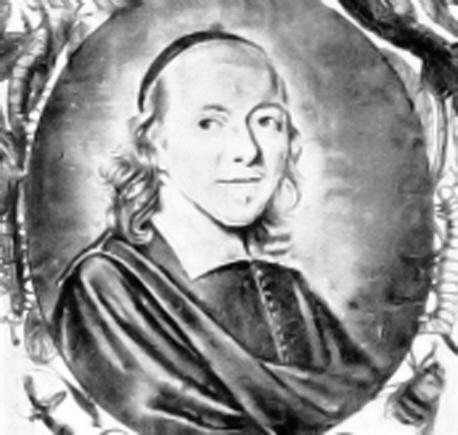
illustrations of parasitoids are found in Metamorphosis by J. Goedart
(1662) <PHOTO>.
He described "small flies" emerging from butterfly
pupae. Antoni van Leeuwenhoek in 1700 (van Leeuwenhoek 1702) described
the phenomenon of parasitoidism in insects.
He drew a female parasitoid ovipositing in aphid hosts. Vallisnieri (1706) <PHOTO> first correctly interpreted this
host-parasitoid association and probably became the first to report the
existence of parasitoids. Bodenheimer
(1931), however, noted that several earlier entomologists recognized the essence
of parasitoidism. Cestoni (1706)
reported other parasitoids from eggs of cruciferous insects. He called aphids, "cabbage
sheep," and their parasitoids, "wolf mosquitoes." Erasmus Darwin (1800) discussed the useful
role of parasitoids and predators in regulating insect pests. During the remainder of the 18th Century an ever-increasing
number of references to entomophagous and entomogenous organisms appeared in
the literature, largely in the form of papers dealing with parasitoid biologies. Diseases of silkworms were recognized
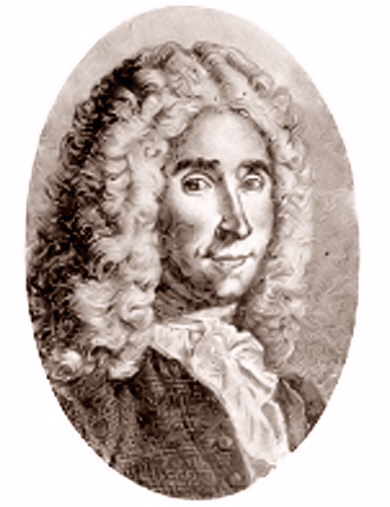
early in the 18th Century. De Reamur
(1726) <PHOTO> described and illustrated Cordyceps fungus infecting a
noctuid larva. Biological Control Efforts in the 18th
Century By
1762 the first successful importation of an organism from one country to
another for biological control took place with the introduction of the mynah bird from India to the island of Mauritius, for
locust control. Further
development of modern biological control awaited the recognition of the fact
that insect pest problems were population phenomena. The controversial publications of Malthus appeared toward the end of the 18th Century, and
generated considerable interest in the subject of populations. Malthus' work will be discussed further in
the next section on "Concepts in Population Ecology." Biological Control Efforts in the
Early 19th Century A
number of articles appeared during the first half of the 19th Century that lauded
the beneficial effects of entomophagous insects. Erasmus Darwin (1800) recommended
protecting and encouraging syrphid flies and ichneumonid wasps because they
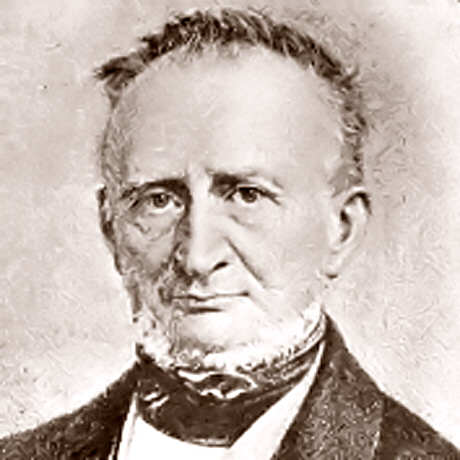
destroyed considerable numbers of cabbage-feeding caterpillars. Kirby & Spence (1815) [see <PHOTO>]
showed that predaceous coccinellids controlled aphids. Hartig (1827)
recommended the construction of large rearing cages for parasitized
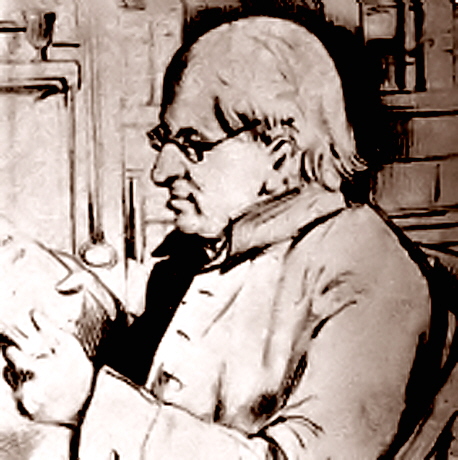
caterpillars, with the ultimate aim of mass release. Ratzeberg (ca. 1828)
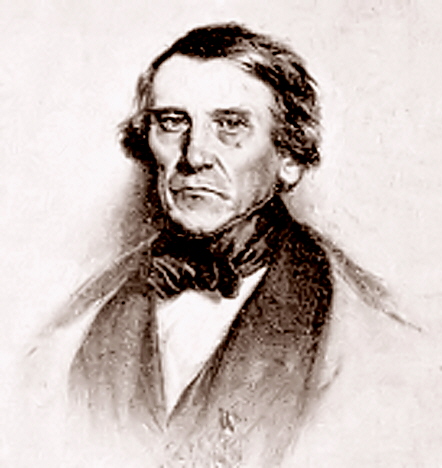
<PHOTO> called particular attention to the value of
parasitic insects with publication of a large volume on the parasitoids of
forest insects in Germany. He did not
believe that parasitic control could be augmented by humans. Agustino Bassi (1834)
first demonstrated that a microorganism, Beauvaria
bassiana, caused an animal
disease, namely the muscardine disease of
silkworms. Kollär
<PHOTO> (1837)
writing an article for farmers, foresters and gardeners pointed out the
importance of entomophagous insects in nature's economy; studied parasitoid
biologies and was the first to report the existence of egg parasitoids. Boisgiraud (1843)
reported that he used the predaceous carabid beetle, Calasoma sycophanta,
to successfully control gypsy moth larvae on poplars growing near his home in
rural France. He also reported that
he had destroyed earwigs in his garden by introducing predaceous staphylinid
beetles. Biological Control in the Late 19th
Century Beginning
in 1850, events associated with the westward expansion of agriculture in the
United States paved the way for the further development of the field of
biological control. During and
following the "Gold Rush" in California, agriculture expanded
tremendously in California especially.
At first the new and expanded plantings escaped the ravages of
arthropod pests. Predictably,
however, crops soon began to suffer from destructive arthropod
outbreaks. Many of these pests were
found to be of foreign origin, and were observed to be far more destructive
in the newly colonized areas than in their native countries. Consequently, the notion grew that perhaps
these pests had escaped from some regulatory factor or factors during their
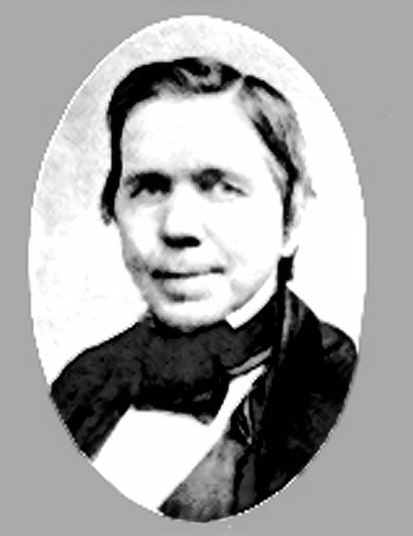
accidental introduction into America. Asa Fitch <PHOTO> (1855) was the
State Entomologist of New York who is recorded as the first entomologist to seriously
consider the transfer of beneficial insects from one country to another for
the control of an agricultural pest.
Fitch suggested that the European parasitoids of the wheat midge, Sitydiplosis mesellana, be sent into the
eastern United States. Benjamin
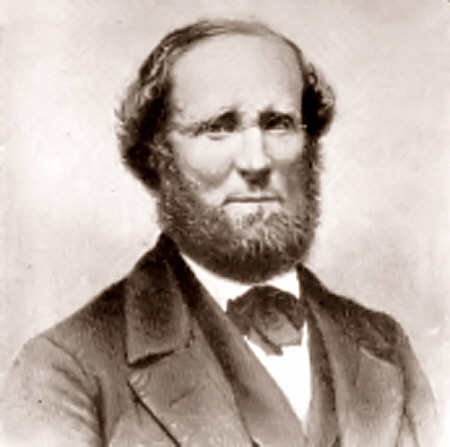
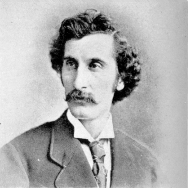
Walsh <PHOTO> supported Fitch's suggestion and in 1866
he became the first worker in the United States to suggest that insects be
employed in weed control. He proposed
that insects feeding on toadflax, Linaria
vulgaris, be imported from
Europe to control invaded yellow toad flax plants. The first actual case of biological control of weeds was,
nevertheless, in Asia, where around 1865 the cochineal insect Dactylopius ceylonicus was introduced from
southern India into Ceylon for prickly pear cactus control (Opuntia vulgaris).
Originally, Dactylopius
had been imported to India from Argentina in 1795, in the mistaken belief
that it was the cochineal insect of commerce, D. cacti. Louis
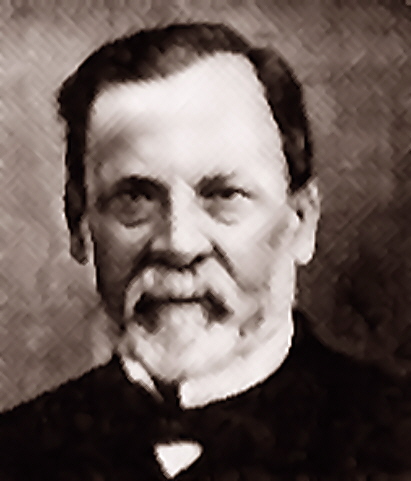
Pasteur (1865-70) <PHOTO> studied
silkworm diseases and saved the silk industry in France from ruin [not really
biological control]. Charles Valentine Riley <PHOTO> (1870) has been named the father of modern
biological control. He shipped
parasitoids of the plum curculio from Kirkwood, Missouri to other parts of
that state. In 1873 he became the
first person to successfully transfer a predator from one country to another
with the shipment of the American predatory mite, Tyroglyphus phylloxerae
to France for use against the destructive grapevine phylloxera. The results were not particularly
successful, however. In 1883, Riley
directed the first successful intercontinental transfer of an insect parasitoid,
Apanteles glomeratus, from England to the
United States for control of the imported cabbageworm. He was Chief Entomologist of the U. S.
Department of Agriculture. In 1872,
11 years before the importation of A.
glomeratus, Riley began his
interest in the cottony-cushion scale, Icerya
purchasi, which was
considered the most important citrus pest in California. He correctly located its point of origin
in Australia. [Doutt's account of
this biological control program on p. 31-38 of the DeBach (1964) text is
particularly colorful. Read this,
paying particular attention to the following: a. the roles played by Riley, Albert Koebele
and D. W. Coquillet. b. note the species of insects involved (the
vedalia beetle, Rodolia cardinalis, and the dipterous
parasitoid, Cryptochaetum iceryae), their source, numbers
imported, and their activities relative to the cottony-cushion scale. c. note the method of colonization, and be
able to describe the spectacular results of these introductions, which changed
the status of the pest to an insect of no economic importance in only four
years time. The
successful biological control effort against the cottony-cushion scale
spirited many biological control attempts in many countries, resulting in
over 200 biological control successes (see Chapter 24 of the DeBach (1964)
text and other hand-outs). The
cottony-cushion scale success admittedly harmed overall pest control in
California for quite some time because growers thought that the vedalia
beetle would also control other insect pests. Consequently, they neglected other mechanical and chemical
control methods. George Compere (1899) became
the first state employee specifically hired for biological control work. He worked as a foreign collector until
1910, during which time he sent many shipments of beneficial insects to
California from many parts of the world.
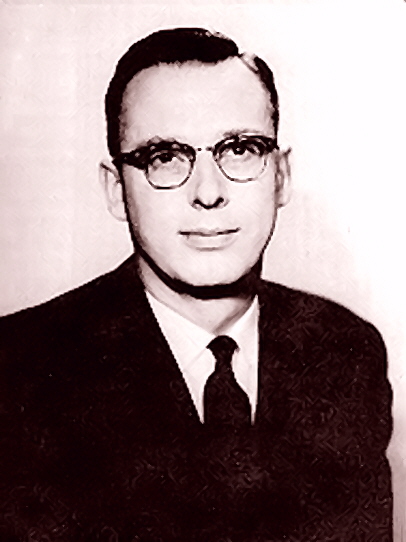
Harold Compere <PHOTO>, his son, also devoted his entire career to the
search for and identification of natural enemies of scale insects. Harry
Scott Smith (1913) <PHOTO> was appointed superintendent of the State
Insectary in Sacramento. In 1923,
biological control work was transferred to the Citrus Experiment Station and
Graduate School of Subtropical Agriculture of the University of California,
Riverside. Biological control work at
Riverside was first conducted in the Division of Beneficial Insect
Investigations, and was changed to the Division of Biological Control with Smith
as chairman in 1947. Personnel were
stationed at Albany and Riverside.
Under Smith, importation of Chrysolina
beetles from Australia for Klamath weed control marked the beginning of
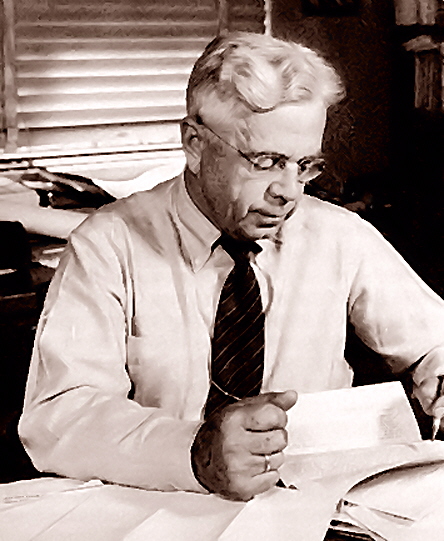
biological weed control in California in 1944. Edward Steinhaus (1947) <> established the first laboratory and
curriculum in insect pathology at the University of California,
Berkeley. Later he transferred to the
newly opened Irvine campus of the University and attempted to further insect
pathology there. His untimely death
in 1968 precluded this goal. The Division of Biological Control became the Department of
Biological Control at UC Riverside and Berkeley in 1954. In 1969 Biological Control was dropped as
a department, becoming a Division of Biological Control within the Department
of Entomology, against the wishes of the entire biological control faculty,
numbering over 24 academics at Riverside and Berkeley at that time. The Berkeley faculty created their own
separate Division of Biological Control with guaranteed privileges and
minimum control by the Department of Entomology. At Riverside, the Division of Biological Control gradually
became dominated by chemical control oriented faculty in the Department of
Entomology. In 1989 the Division was
abolished, against the wishes of 85% of the faculty in the Division. Ignorance and pecuniary control among the
ranks of University of California bureaucrats is believed to be the principal
cause. Although the dissenting
faculty in the Division each wrote a personal plea to the then Chancellor
Rosemary S. J. Schraer to discuss the matter, in not one case was a reply
received. Biological
Control at the University of California
The biological
control unit at the new campus of the University of California in Riverside
was by 1962 the most renowned research entity for
that discipline in the world. It
served as a World Center for students and scientists devoted to the practice
of classical biological control, where natural enemies were sought worldwide
for importation and establishment.
Although this unit's headquarters was at Riverside, about 1/3rd of the
faculty resided at facility in Central California at Albany, just five miles
north of the UC-Berkeley campus. By
1961, UC-Riverside and the Albany facility had a total of about 18 full-time
professional biological control faculty plus several emeriti; about 10
Research Associates, and graduate students that varied from 10-20 until the
1980's. Members of this statewide
department interacted with other similar organizations in various parts of
the world, especially the Commonwealth Institute of Biological Control, that
had established laboratories worldwide, and the U. S. Department of
Agriculture. On the world scene, it is estimated that there were more than
300 scientists engaged in Classical
Biological Control (= The
search for, importation and propagation of new species of natural
enemies). This does not include
investigators engaged only in fundamental research. The harmony amongst these scientists was exceptional and
admired, and was spirited most likely from a realization that cooperation
accelerated achievements in a field that required extensive knowledge of
arthropod biology and breeding habits. However,
a feud developed among some of the top administrators in the University of
California and within the Department of Biological Control itself that
ultimately contributed to the demise of this outstanding unit. The basis was involved, but especially
referred to unprofessional conduct, the hiring of new faculty that was not
supported by a majority of the Department, and animosities developed in
previous years when current administrators had previously served as technical
staff. The then Dean of Agriculture,
Dr. Alfred Boyce, operating through departmental administrators, organized a
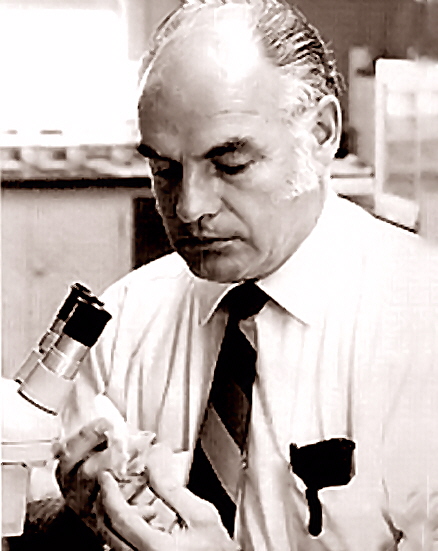
voting block among the younger faculty against one Dr. Robert van den Bosch
<PHOTO>, who was
very vociferous in denouncing what he perceived to be administrative
inadequacy. This ultimately led to
van den Bosch being asked to leave the unit, especially after his rebellion
extended to a denunciation of the scientific integrity of several active
faculty. A pervasive
gloomy atmosphere followed, especially among the newly hired faculty. Van den Bosch left the Riverside campus
for the branch laboratory in Albany, California, taking with him some highly
skilled technical personnel, and a while later a new faculty member, Dr.
George Poinar, Jr. Other faculty and
staff at Riverside that were disturbed by the politics of these events then
joined the separate Department of Entomology. The
feud had far reaching consequences in the University of California that persisted
into the latter part of the 20th Century.
One Riverside professor who had sympathy for the Albany group tried on
two occasions to have a faculty member fired whom the Riverside group had
supported. This even though his first
attempt presumably banned him from the fellow's promotion committee. Another especially malevolent incident
involved a Korean graduate student, where a junior member of the Qualifying
Committee who had been a student at Albany contrived a scheme to deny the
Korean student his PhD Degree.
Teaming up with another faculty of the Biology Department the two
failed the student and refused to grant him a second Qualifying Examination
even though other members of the committee deemed his performance on the
examination excellent. The incident
was especially illogical and sordid because the two dissenting faculty had
given the student high passing grades in their courses, and no indication of
inadequacy was ever made to the major professor whom they obviously despised
for his support of Dean Al Boyce in the earlier Interdepartmental
conflicts. The Korean student had
gained high grades in all his courses and established an excellent rapport
among Public Health organizations in California while performing his thesis
research. As a credit to the
integrity of the University of California, wisdom prevailed as the two
dissenters were removed from the student's committee. He gained the PhD Degree following a
successful reexamination and later became Head of the Department of Public
Health in Seoul, Korea. Dr.
Boyce later expounded on matters that revealed more of the nature of the feud
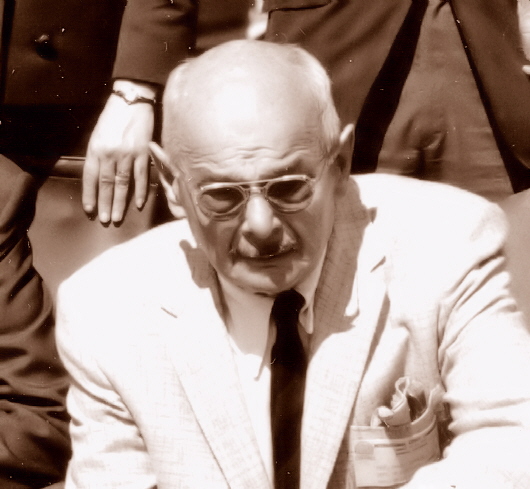
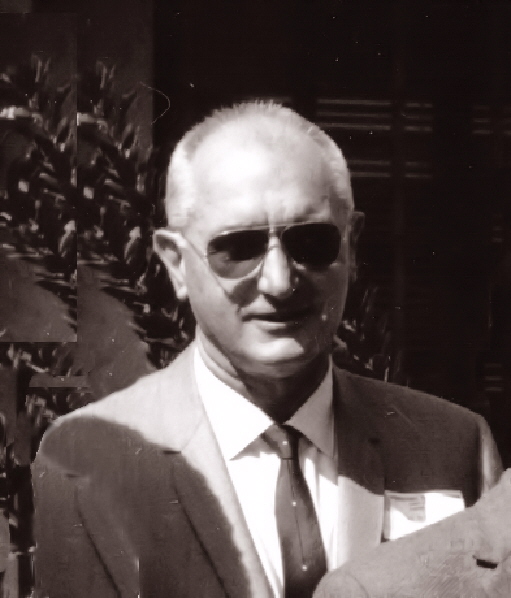
(Boyce 1997/98) and personal communications). He was especially distraught when Dr. Paul DeBach <PHOTO> and associates
at Albany ignored his contribution to the discovery of the citrus red scale
parasitoids, Aphytis maculicornis
and Coccophagoides utilis
that parasitized olive scale in Pakistan and Iran. He also maintained that he had made the original discovery of Aphytis melinus that attacks red
scale (Aoidinella auranti) in Pakistan, although it is unclear whether
he was able to send a viable culture to California [Personal communication to
Dr. E. F. Legner]. The living cultures that he did obtain from that region that
was typically undergoing intense political unrest exposed him to "a hail
of bullets" as he once described to Dr. E. F. Legner. Yet, not one mention of his involvement in
the discovery or acquisitions of these parasitoids was ever made by DeBach or
his associates who later were credited with their discovery. A disregard of the honor process among
scientists in recognizing each other's contributions may have far reaching
effects. Yet these failures continue
and may be widespread as shown by the recent description of Biosteres
sublaevus Wharton that ignored mention of original specimens
donated from years of effort in securing them from the wild (Legner & Goeden 1987 ). Being
weakened as it was, by the loss of highly capable and productive scientists,
and lacking in political adeptness, the Riverside unit fell victim to the one
Riverside Campus President who had the power to do a coup de graz. It
may be debated that his professional background in Political Science
certainly did not justify his making unilateral decisions concerning the
Biological Control discipline. By this time, DeBach had become
dismayed at the politics and rather accepted the final triumph of the Al
Boyce lobby. DeBach, because of his
international renown in the field of Biological Control, should have been the
logical choice to lead the Department as Chairman. However, against the wishes of most of the faculty, Dr. Boyce
hired Dr. Don Chant of Ontario, Canada to head the Department. Chant had a very positive influence on the
younger faculty especially by helping them to attain the research funds that
are needed to do this highly sophisticated and time-consuming research. However, he then gradually became
increasingly dismayed at the politics of the higher administration and after
three years returned to Canada to head the Department of Zoology at the
University of Toronto. Boyce then,
against the wishes of the entire faculty, unilaterally abolished the
Department of Biological Control, and forced it to reorganize as a subsidiary
Division of Biological Control within the Department of Entomology, that was
on the whole devoted to the use of pesticides to control agricultural
pests. Later the Division itself was
abolished through the intense efforts of Dr. Boyce and against the objection
of 90% of its faculty. In the
meantime, the Albany faculty continued relatively autonomous from the
pesticide-oriented fraction, but ultimately lost critical numbers who were
devoted solely to the classical biological control approach. Another contributing
factor to Riverside’s decrease in classical biological control activity is
related to a reduced ability to interact with professionals overseas. To illustrate this it should be considered
that classical biological control successes have relied heavily on
the interaction with other international organizations, especially the
Commonwealth Institute of Biological Control with headquarters in Curepe,
Trinidad. Various permanent and
temporary laboratories of this organization existed in all parts of the
world. Researchers there would host,
assist and otherwise interact with those of the United States Department of
Agriculture and the University of California to obtain beneficial
species. As independence from the
British Commonwealth developed among the different countries that maintained
laboratories, local support for their continuance diminished, and in many
cases ceased entirely. This has
resulted in a greater than 90% decrease in classical biological control
activity worldwide. Bizarre Tragedies
Among Biological Control Specialists
There
have been four known suicides among the ranks of
biological control scientists. These
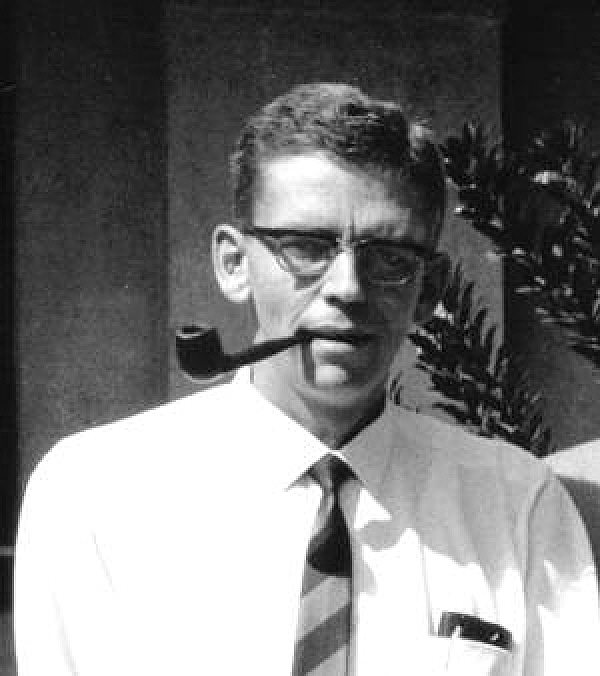
were Owen Smith and Irv Newell of the Untied States, Giuseppii Zinna of
Italy, and David Annecke <PHOTO> of South
Africa. Smith was found by technician
Louis Dawson, hanging from a tree in the biological control orange grove on
the University of California, Riverside campus. This just after his success in classical biological control of
the grape leaf skeletonizer. The
caterpillars possess urticating hairs that can interfere with the health of
persons in close contact with them.
Zinna had just been hired by the Division of Biological Control in
Riverside as chief systematist: the position that was later filled by Gordon
Gordh. Zinna returned to Italy,
presumably to gather his personal effects, when he, unprovoked, jumped from
an eight-story building. Annecke
killed himself in South Africa, also without known provocation. Luciano Campos of Chile died from a
suspected suicide. Newell killed
himself with a shotgun at his home in Riverside. Rumors were that he suffered from cancer, but he also was known
to suffer constant severe pain in the facial area, which may have been an
allergic reaction to the mites with which he so diligently worked. Robert
van den Bosch died from a
heart attack while jogging in the Berkeley, California area. He had been ardently pursuing the
Pesticide Industry (van den Bosch 1978) for unscrupulous activities in pest
control, gaining the animosity of many dedicated to chemical pest control. There seemed to be no generally known
history of cardiac illness. Paul
Messenger, who took up the struggle against pesticides after van den Bosch's
death, also died mysteriously from a heart attack. Blair Bartlett died in his hospital bed immediately after
having heart bypass surgery in San Bernardino, California. He had been studying the effects of
pesticides on beneficial organisms, and just concluded that almost all
available materials had severe detrimental effects on an array of species in
many important families (Bartlett 1964*-- 1966). Harry Shorey, working with insect pheromones as a substitute
for chemical insecticides in the Coachella Valley, was killed when the
automobile that his student was driving collided with a truck transporting
produce from Mexico. Also, the early onset of dementia
and related illnesses plagued a number of scientists who were directly or
indirectly involved in biological control research. Among these were Robert Luck, Thomas Bellows and Everett
Schlinger. Exercises
Exercise 2.1-- When was the
importance of insect predation first recognized? Insect parasitoidism? Exercise 2.2-- Trace the
development of biological control in the 18th, 19th and 20th centuries. Exercise 2.3-- Give the past and
present organization of biological control research in the University of California. REFERENCES: [Additional references may be found at MELVYL Library ] Bartlett, B. R. 1964a. Integration of chemical and biological
control, p. 489-511. In: P. DeBach (ed.), Biological Control of Insect Pests and
Weeds. Reinhold, New York. Bartlett, B. R. 1964b. The toxicity of some pesticides to eggs,
larvae, and adults of the green lacewing, Chrysopa
carnea. J. Econ. Ent. 57: 366-9. Bartlett, B. R. 1964c. The toxicity of some pesticide residues to
adult Amblyseius hibisci, with a compilation of
the effects of pesticides upon phytoseiid mites. J. Econ. Ent. 57:
559-63. Bartlett, B. R. 1965. The repellent effects of some pesticides
to hymenopteraous parasites and coccinellid predators. J. Econ. Ent. 58: 294-96. Bartlett, B. R. 1966. Toxicity and acceptance of some pesticides
fed to parasitic Hymenoptera and predatory coccinellids. J. Econ. Ent. 59: 1142-49. Bassi, A. 1935. Del mal del
segno, calcinaccio o moscardino, mallatia che affigge i bachi da seta e sul
modo di liberarne le bigattaie anche le piu infestate. Part
I: Theoria. Orcesi, Lodi. p. 1-9, 1-67. Bellows,
T. S., Jr. & T. W. Fisher, (eds)
1999. Handbook of Biological
Control: Principles and Applications. Academic Press, San Diego, CA. 1046 p. Bodenheimer, F. S. 1931.
Der Massenwechsel in der Tierwelt.
Grundriss einer allgemeinen tierischen Bevölkerungslehre. Arch.
Zool. Ital. (Napoli) 16: 98-111. Boyce, A. M. 1987. Odyssey of an Entomologist. Kingsport Press, Kingsport Tenn. pg 213-219.
Boyce, Alfred Mullikin.
1997/1998. Odyssey of an
Entomologist: adventures on the farm, at sea, and in the university / by
Alfred M. Boyce ; based on taped conversations with John G Gabbert ; edited by Elizabeth Lang and
Robert Lang. Riverside, Calif. : UC
Riverside Foundation, 1987, c1986. Compere, G. 1902. Entomologist's Report. Introduction of Parasites. West. Austral. Dept. Agric. J. 6: 237-40. Compere, G. 1904. Black scale parasite (Scutellista cyanea). West Austral. Dept. Agric. J. 10: 94. Compere, G. 1921. Seasonal history of black scale and
relation to biological control.
Calif. Citrog. 6: 197. Darwin, E. 1800. Phytologia. Publ., London. Doutt, R. L.
1964. The historical
Development of biological control. In: P. DeBach (ed.), Biological Control of Insect Pests and
Weeds. Reinhold Publ. Corp., New
York. 844 p. Fitch, Asa. 1954. Sixth, seventh, eighth and ninth reports
on the noxious, beneficial and other insects of the state of New York. Albany, New York. 259 p. Goedaert, J. 1662.
Metamorphosis et Historia Naturalis Insectorum. Jacques
Fierens, Middelburgh. Kirby,
W. & W. Spence. 1815. An Introduction to Entomology. Longman, Brown, Green & Longmans,
London. 285 p. Kollär, Vincent.
1837. In: London's Gardner's
Magazine. 1840. [English
translation]. Legner, E. F. & R. D. Goeden. 1987. Larval
parasitism of Rhagoletis completa (Diptera: Tephritidae)
on Juglans microcarpa (Juglandaceae) in western
Texas and southeastern New Mexico.
Proc. Entomol. Soc. Wash. 89(4):
739-743. Malthus, T. R.
1803. An Essay on the
Principle of Population as It Affects the Future Improvement of Society. J. Johnson, London, 2nd ed. 610 p. Pasteur, L. 1870 Etudes
dur la maladie des vers a soie. Gautherie-Villars, Paris, I:
322 p.; II: 327 p. Ratzeburg, J. T. C. 1944a.
Die Ichneumonen der Forstinsekten in forstlicher und entomologischer
Beziehung; ein Anhang zur Abbildung und Beschreibung der Forstinsekten. Theile, Berlin. 3 vol. Ratzeburg, J. T. C. 1944b.
Die Ichneumonen der Forstinsekten, Vol. I. Berlin. Réaumur, M. de. 1726.
Remarques sur la plante appellée a la Chine Hia Tsao Tom Tchom, ou
plante ver. Mem. Acad. Roy. Sci. (21 Aug 1726). p. 302-5. Riley, C. V.
1893. Parasitic and predaceous
insects in applied entomology. Insect
Life 6: 130-41. Riley, W. A.
1931. Erasmus Darwin and the
biologic control of insects. Science
73: 475-6. Smith, H. S.
1916. An attempt to redefine
the host relationships exhibited by entomophagous insects. J. Econ. Ent. 9: 477-86. Smith, H. S.
1919. On some phases of insect
control by the biological method. J. Econ. Ent.
12: 288-92. Smith, H. S.
1929. The utilization of
entomophagous insects in the control of citrus pests. Trans. 4th Internatl. Congr. Ent. 2: 191-8. Steinhaus, E. A. 1946. Insect Microbiology. Comstock Publ. Co., Inc., Ithaca, New
York. 763 p. Steinhaus, E. A. 1949. Principles of Insect Pathology. McGraw-Hill Book Co., Inc., New York. 757 p. van den Bosch, R. 1978. The Pesticide Conspiracy. Doubleday, New York. 226 p. van Leeuwenhoek,
A. 1702. Letter in Nr.
266 of the Philosophical Transaction 1700-1701, Vol. 22, p. 659-72. Smith & Walford, London. van Lenteren, J.
C. 1983. Biological pest
control: passing fashion or here to
stay? Organorama (Netherlands)
20: 1-9. Walsh, B. D.
1866. Practical
Entomologist. June 1866. p. 1 |