File: <ethnic1.htm>
<List of Illustrations> Citations Credits Dedications Archeology Index Visitors Index
<American
Archeology>
ETHNIC
DIVERSITY IN AMERICA BEFORE COLUMBUS
SUPPORTS
PREHISTORIC OLD WORLD CONTACTS
(Contacts) Please CLICK on underlined
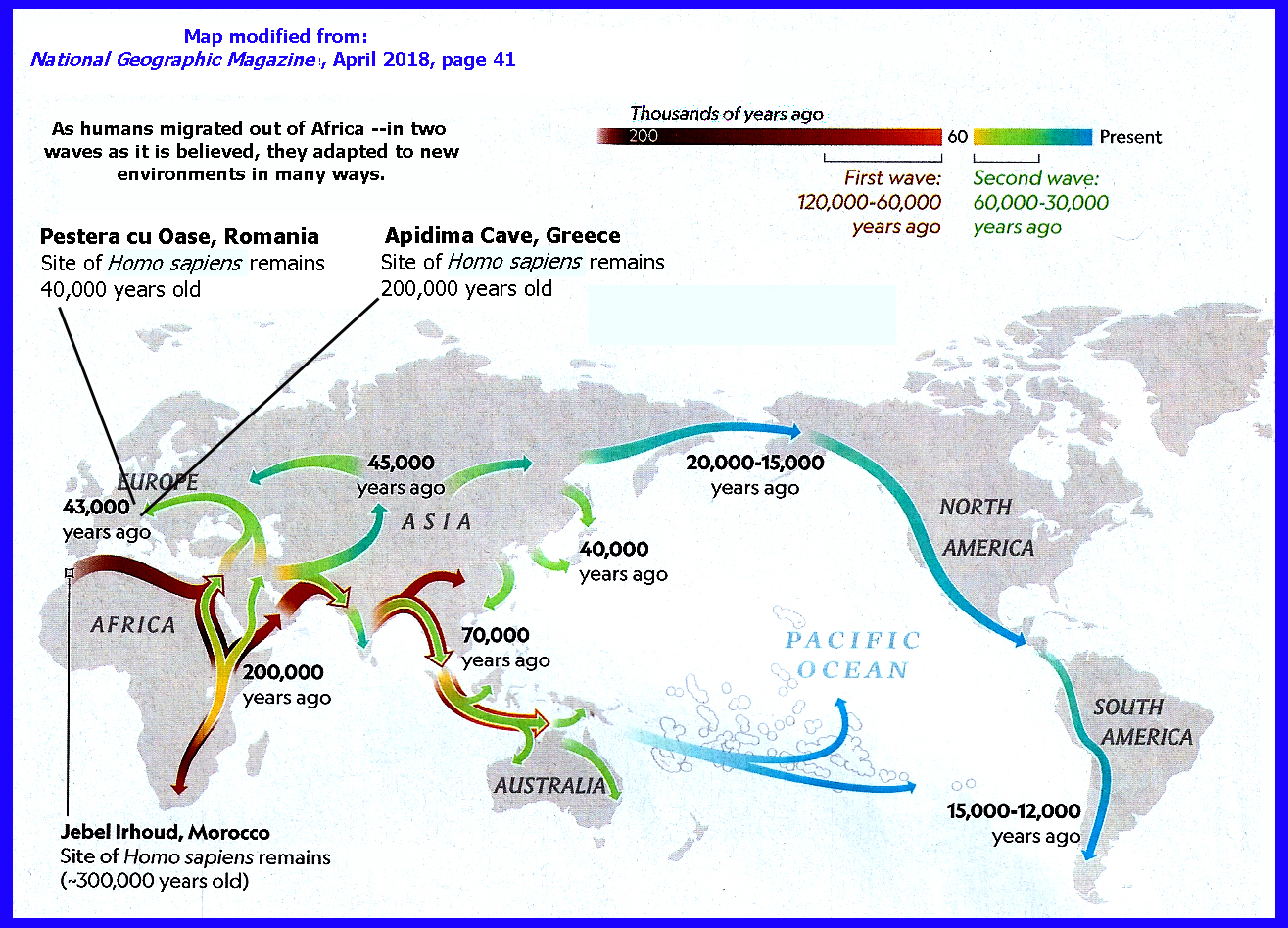
categories and photos for more detail: Map of Human Emigrations Bibliography It has long been
suspected that peoples of the Old World made contact with the Americas many
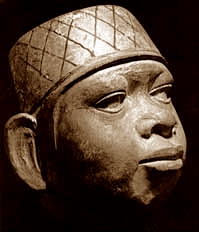
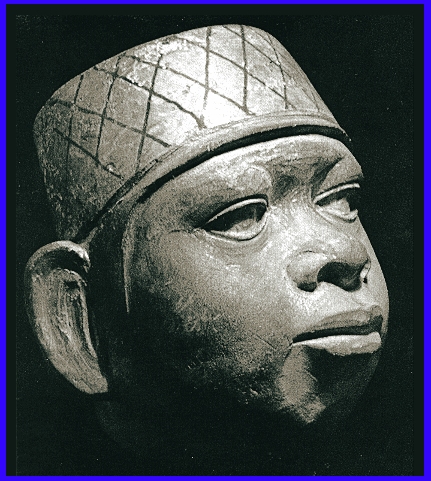
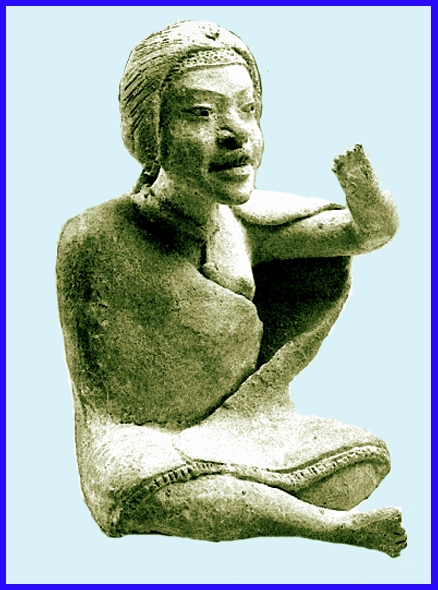
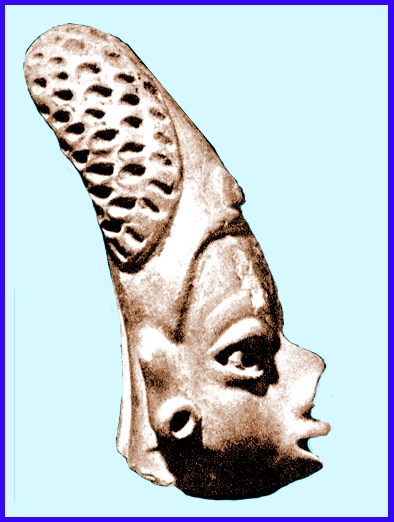
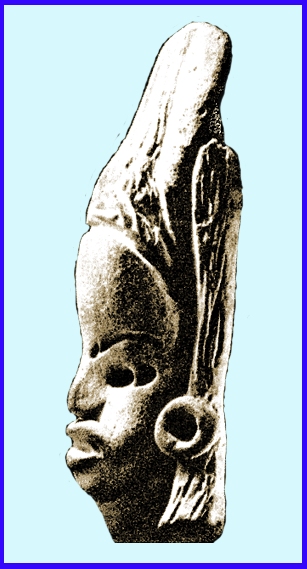
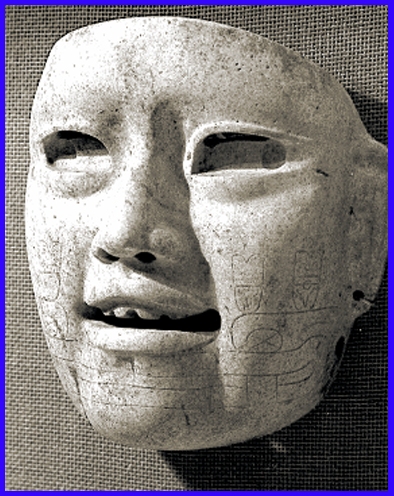
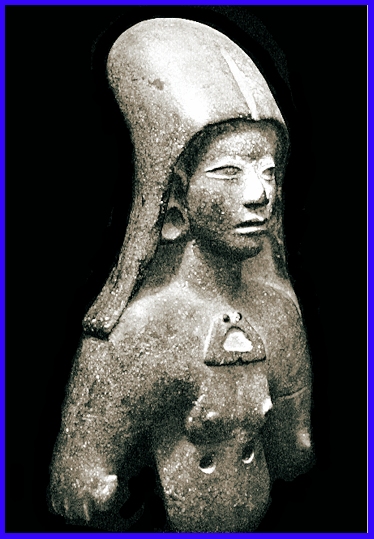
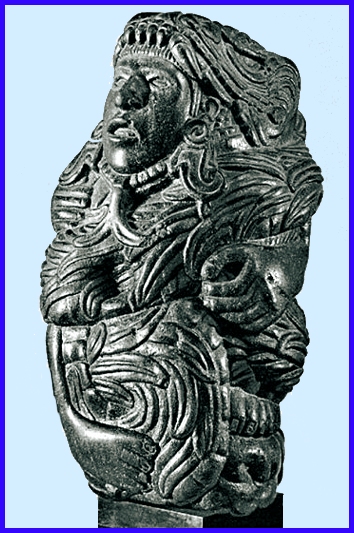
centuries before Columbus (Hristov & Genoves 1999). The human figures sculptured in stone and
pottery, Some researchers have
gone the extreme to explain away the African influence in particular. For example, Coe & Diehl (1980),
referring to the massive stone sculptures in Mesoamerica,
some weighing more than 40 tons, stated:
Blood type analyses in
the 20th Century do not support the ethnic
diversity visible in artifacts. This could be in part due to the widespread
population mortalities from epidemics introduced by Old World colonists in
the 16 Century, which often reduced indigenous populations by more than 90
percent. Recovering populations
certainly would possess reassembled genotypes in a different manner from that
existing prior to the catastrophic epidemics. These epidemics have been attributed to both endemic pathogens
and those introduced by European colonists.
Studies by Dr. Rodolfo Acuna-Soto of Mexico’s National Autonomous
University indicate that many of them may have been outbreaks of Ebola-like
viruses. Of especial importance, Dr.
Francisco Hernandez, a physician to the Spanish king, described fevers that
caused heavy bleeding, which make the records in 1576 similar to the
hemorrhagic Ebola virus. The
epidemics raged through the native American populations, killing four out of
five people infected, frequently within a couple of days. Analyses of Native
North American DNA in 2018 reveals that most derive from Siberian stock. Yet archeological probes show
Pre-Columbian contacts with other groups such as Jomón Japanese, Clovis point
people of southwestern Europe (France, Spain & Portugal), Middle Eastern groups smelting aluminum in
Virginia, Norsemen from
Greenland, Iceland and Scandinavia,
West Africans bringing their unique farming practices to Middle America,
etc.. Therefore, the absence of
genetic make-up of these other groups in living Native North Americans is a
mystery. Perhaps some insight may be
derived from DNA studies on our companions, the dogs. Although dogs were present in
Pre-Columbian America where they served not only as pets but also as food for
some groups, their genomes have completely disappeared from present-day dogs,
which are wholly of Old-World origins.
The dilution of human genomes by later immigrations of very large
numbers of people over the Bering Straits might have finally overwhelmed the
earlier diversity so that it is no longer detectable. Modern day Siberians certainly bear a resemblance
to some native North Americans, and which DNA analyses support. The earliest evidence of Old World Pre-Columbian activity in America has
been found of Sumerians in South America who left cuneiform writings on
ancient ceramic and sculptured artifacts (See: Dr. Bernardo Biados). Then the Olmec civilizations appeared
in Southern Mexico around 2,000 B.C.E.
The name in Aztec Nahuatl means
"People of the Land of Rubber." Ethnically and culturally they exhibited African and Asian influences.
These people were concerned about their identity
to the extent that they devoted considerable resources to document their
presence through the construction of gigantic monuments, the quality of which
demanded A close examination of
the sculptures and other artwork after ca. 950 B.C.E. shows continuing, but
diminishing Olmec influence, which was accompanied by periodic massive
destruction of their monuments. Many
of the largest sculptures sustained mutilation on a massive scale, in an
effort that must have almost equaled that of their creation. It has been implied that this may have
been a ritual at the death of an old ruler, or caused by outside
invaders. Beginning around 200
B.C.E., there appears to have been a long period of integration with the
Eurasian peoples moving in from the north and elsewhere. Around this time the quality of the human
rendition in ceramics became especially advanced, sometimes equaling that
being produced today (e.g., Figs. 27,
54, 55, 63 & 66). The legend of the “god” Quetzalcoatl suggests that he possessed
possible African ancestry (Fig. 182),
and he left the area sometime after 500 AD.
Could there have been a return of some of the Olmec back to Africa
back then? Certainly, the Olmec
culture diminished its influence in the humid lowlands of southern Mexico
after the 1st Century AD.
Speculations on the reason for this have included a widespread
outbreak of malaria (origins in Africa) and aggressive invaders from the
north. However, the African presence
is maintained in Mesoamerica through Aztec times in the 15th Century,
implying repeated contacts, accidental or otherwise, with the African
continent. Another argument
against the Pre-Columbian colonization of America by people from the Old World
implies the independent development of "identical" European,
African and Asian ethnic features in the people of both hemispheres. Anthropologists continue to revise
estimates when true humans, Homo sapiens,
first began to leave Africa. Larick & Ciochon (1996) judged this to be
around 80,000 B.C.E. But in Romania the Peștera cu Oase meaning "The Cave with Bones" is a system
of 12 karstic galleries and chambers located near the city
of Anina,
in Caraș-Severin county, southwestern Romania, where some
of the oldest European early modern human (EEMH) remains, between
37,000 and 42,000 years old, have been found. While in Greece
some possibly human skulls are dated 200,000 years old. Both discoveries point to a much earlier
exit from Africa of humans (Trinkhaus
et al. 2006 and Map of Human Emigrations), with the Nile River possibly being involved as
more northern exit routes.. Nevertheless, human
existence on the African continent extends much further back in time, with
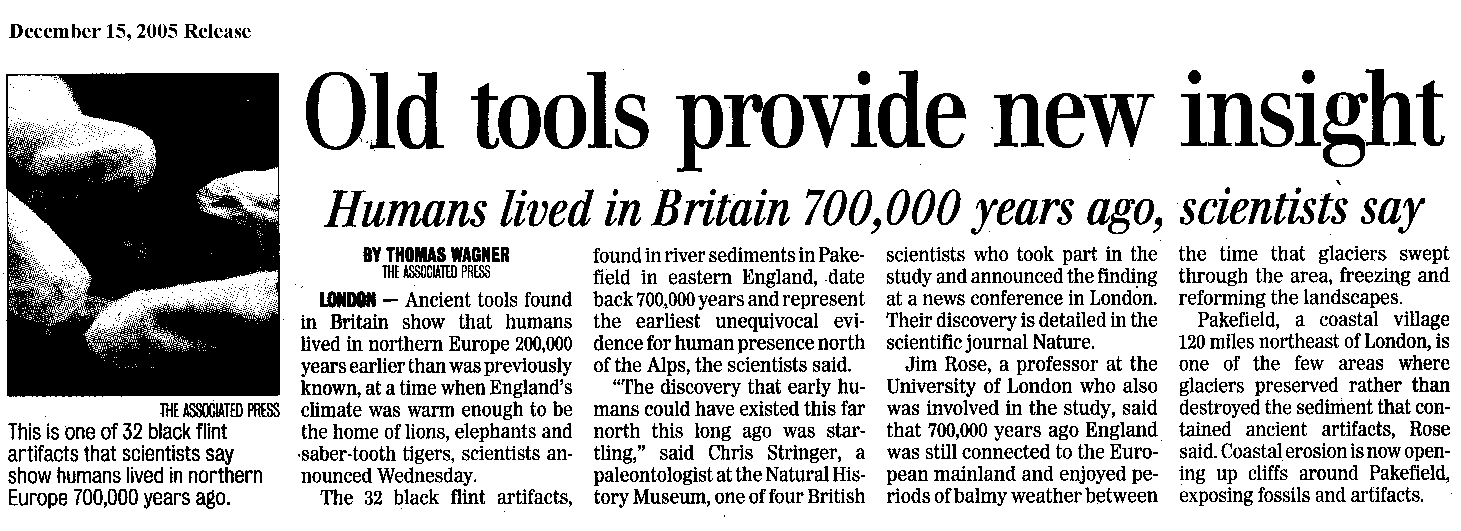
DNA evidence from Palestine and the Cameroons being around 350,000 BC. (see 700,000 BP, and Diamond). Humans had evolved independently with a
close relative, Homo erectus, which
left central Africa around l.5 million B.C.E., and spread to all parts of the
world with the possible exception of America (Leakey 1995). However, the Calico site in California has
already been suspected as a possible Homo
erectus site (see Early
Humans), and a recent discovery in
Kansas of a footprint with an opposed big toe points to the possibility of
even earlier species (see Kansas). Analyses of the DNA in mitochondria and
the Y chromosome support the theory that Homo
sapiens left Africa in two small groups through present day Yemen
and spread to other parts of the world after 80,000 B.C.E. Various races of humans developed in the
different geographic regions of the world from wherever Homo sapiens settled down. It took a long time for this to occur to
the degree that our major races differ today. A conservative estimate for the differences between some Asian,
African and European ethnic groups is at least 20,000 years. As Africa was the point of origin of Homo sapiens, it would make ethnic
groups in Africa the most ancient, with a period of development probably
exceeding 300,000 years (Please see James Shreeve for detailed
account). In America, the accepted
dates for the earliest presence of humans range from 15,000 B.C,, to 40,000
B.C.E., although earlier dates are suspected and eventually could be found
(see Savannah). It might also be considered that initial
migrations to America were along coastal ice sheets that joined America with
the Old World prior to 15,000 B.C.E. For example, the technology for
producing Clovis projectiles may have entered southwestern Europe at least
1,000 years before its development in America (See Aquatania). Land bridge migrations of Homo sapiens to America began between
Siberia and Alaska around 15,000 B.C.E., and much later migration routes from Europe, Africa
and Asia varied. It is possible that
after 14,000 B.C.E. humans sailed west in boats following the then existent
ice sheets across the Atlantic.
Certainly, the islands of Hawaii were first colonized from the north
(e.g., Alaska & Siberia) [see Hawaii
History]. Another suggestion is that they arrived first on the Pacific
coast to the State of Guerrero, Mexico.
Indeed, the Polynesian chicken existed in South America prior to the arrival
of Europeans in the 16th Century
(see Chickens). Polynesians who brought the chicken to
South America then returned home with
the American sweet potato and African bottle gourd. Huyghe (1992) pointed out that some Africans, for example,
utilized large vessels capable of carrying many tons, in their trading
activities around the Indian Ocean. There
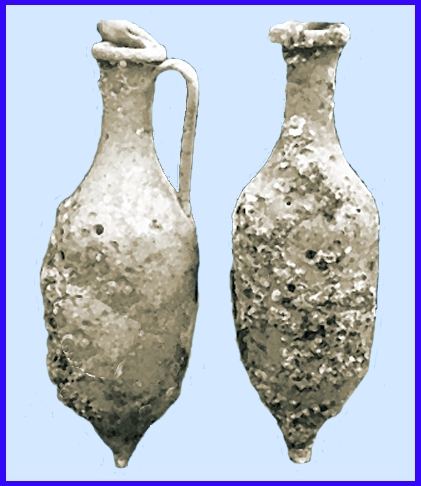
was extensive sailing activity by the Phoenicians and Romans up and down the
coasts of Europe and Africa; and at least one ancient wreck is reported from
off the coast of Brazil (Fig. 76, Marx 1992). One can imagine that occasionally some of
the vessels, with variable ethnic groups on board, may have strayed off their
course during storms, and landed in America.
A pronounced presence of linguistic similarity with the Middle East
and Asia are now found on inscriptions of many South American artifacts (Biados-2018). Bailey (1994) advanced the possibility of
early quests for raw materials, such as tin and copper, in America by
seafaring European people during the Bronze Age (6,000-1,190 B.C.E.) [Also
see Bronze].
The possibility that Egypt might have had intense contact with North America
is supported by the discovery in 1950 of large boats adjacent to Khufu’s
great pyramid. They were buried
between 2,589 and 2,566 B.C.E. One
has been restored and it shows considerable wear from long journeys. Its length is 43.63 meters, width 5.66
meters (see Egyptian
Boat). However, the
absence of bronze tools among the artifacts of America has not been explained
and this argues against contacts with the Old World during the Bronze Age
(Please see Bronze Age Tools). There is historical evidence for a large
seafaring trade in reindeer hides by people from the Mediterranean area (see Sea Peoples).
Edo Nyland reviewed the information available and concluded that
Pre-Columbian voyages, especially from the Mediterranean Region, were almost
a certainty (see Human
Migrations). Discoveries of ancient Asiatic and Middle
Eastern writing and sculpture are being found in South America, and a 45,000 year old mammoth kill in Colorado
shows one carcass covered by large stones that kept it submerged in a shallow
lake pointing to human activity.
Arrival to North America that long ago would have necessarily meant
coastal sea travel. The European and Asian faces in Mesoamerican
sculpture and artifacts appearing intermittently after 2,000 B.C.E. show a
trend for the former to be more numerous in colder and drier areas, and the
latter in humid tropical areas. The possibility of contact by
people from southern and central Asia in Pre-Columbian America has been
advanced (Carter 1964, 1976; Ekholm 1946, 1953, 1964, Estrada et al. 1962, Heine-Geldern 1954, 1959; Jairazbhoy
1976, Phillips 1966, Shao 1976, Smith 1915).
In the History of the Liang Dynasty,
published in China ca. 629 AD, there is mention of a voyage around 499 AD to
a country that was very likely America (Shao 1976). The actual place was described as "The Country of the Extreme East." Shao (1976) also showed many photographs
of statues and temple art of Mesoamerica that bear a very close resemblance
to similar early art of China and India.
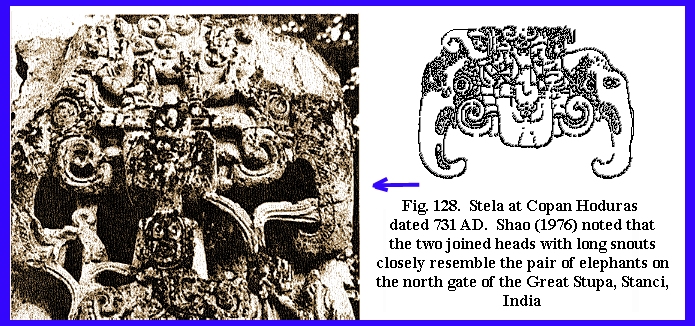
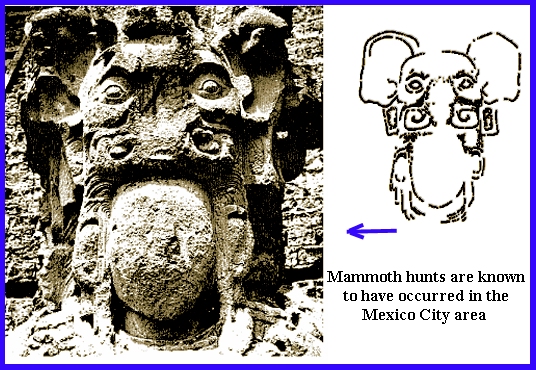
In particular, the depiction of elephants on some of the early Mayan
temples has always been a mystery (Figs. 128,
131 & 133). Although people in Southern Mexico had hunted mammoths in 8,000
B.CE. (Coe 1994 & Mammoths, Camelids, & Lions)), they were extinct long
before development of the Maya civilization.
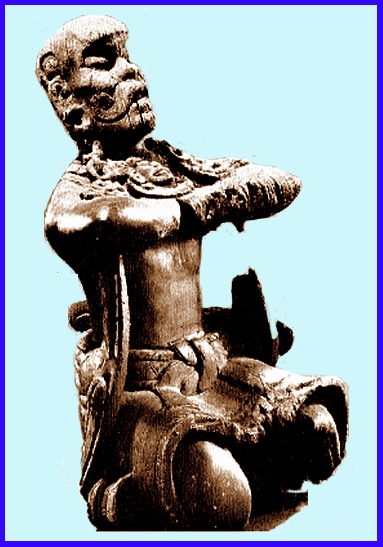
The art styles found in Honduras especially resemble those of early
India and southern China. Many of
these associations were already noted by Vining (1885). The finding of Japanese style pottery in
coastal Ecuador from ca. 3,000 B.CE
has been attributed to early contact there by ancient mariners from
Japan sailing southeast with the coastal currents in small boats (Jairazbhoy
1976, Meggers 1992, Meggers & Evans 1966). Coe (1994) noted a similarity between the architecture at El
Tajín, Mexico and Bronze and Iron Age cultures of China. The possible
discovery of the American drugs cocaine and tobacco in Egyptian mummies has
been discussed at length by S. A. Wells (see Mummy), although contamination by modern workers may have
confounded the data. There has been an especially interesting probable Norse
connection in North America by 1,700 B.C.E., as revealed in pictographs and
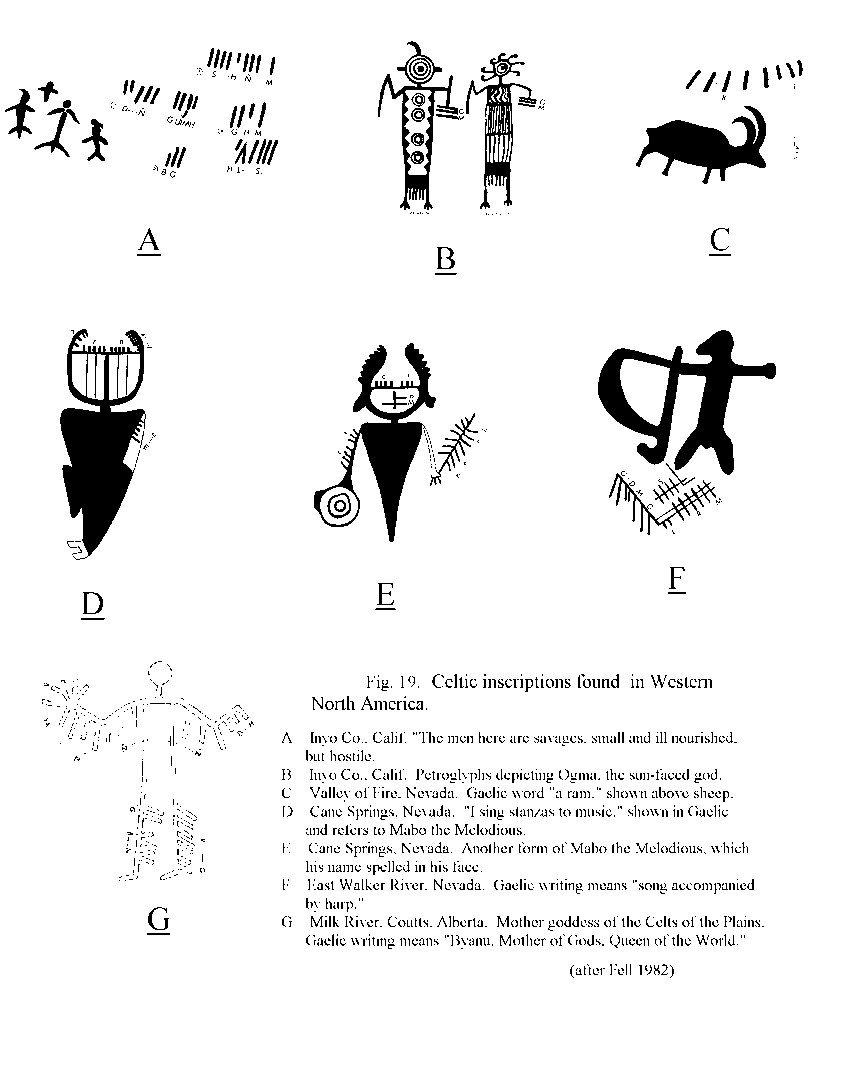
petroglyphs (Figs. 11, 15, & 19) (Fell 1982). Some of these early Norse settlements even appear to have
developed to the level of herding bighorn sheep (Fig. 20) (see Attachment
#1). An advanced form of weaving may also have
been brought to America by these explorers who were in search of copper
(Bronze Figs. 158, 159, 161). Later
immigrations and settlements in America by the Norse are certain (See Norse).
Legends are widespread in Polynesia of contacts with white people (see
Polynesia).
Other unanswered questions include why are there so many Japanese
words and phrases in the Zuni language of New Mexico and Arizona, and why
does the native Purepecha language in the State of Michoacán, Mexico bear
little resemblance to Nahuatl, the primary indigenous language root in
Mesoamerica? Furthermore, the
existence of a widespread universal language in pre-Christian times, the West African Language, provides clues to Pre-Columbian voyages
throughout the world. Linguistics Archeology that studies the relationships of modern languages
to the ancient West African Language is giving us greater insight into
people’s migrations. Some more recent
sailings to America by Europeans after 700 A.D. seem to have occurred (see Great
Ireland and West
Virginia Petroglyph). The presence of
cultivated plants sometimes reveals pre-Columbian contact with Asia and
Africa, although caution is advised before making definite comparisons (see
<Plants>). For example, Spanish friars reported that
the Maya in Yucatan were growing both yams and sweet potatoes at the time of
the Spanish conquest (Landa 1556).
However, the genus of yams, Dioscorea,
occurs as separate species in America, Asia and Africa. The botanist,
Galletty Wilson maintained that tobacco, a native
American plant, was in use across Africa long before the arrival of
Portuguese traders; and the American sweet potato was thought to be
cultivated in Uganda before the time of Columbus (Bailey 1994). Bernal (1973) remarked that the American
peanut was probably cultivated in China by 3,000 B.C.E. Pompeian murals have been reported to
contain accurate portrayals of two tropical American plants, the pineapple
and the sour sop, Annona squamosa
(Neugebauer 1962). American cultivated cottons are tetraploid, with one set
of genes resembling the genes of American wild cottons, and the other set
that of all Asiatic cottons (Bailey 1994, Brücher 1989). Human intervention would be essential to
explain this relationship. Tetraploid
cotton was being used in Peru in 4,000 B.C.E.! The American sweet potato, Ipomoea batatas, is especially
interesting, because many varieties of it were being grown in Polynesia long
before European contact there (Brücher).
Its name in Polynesia and in America is close to "kumar" or "camote,"
which comes from the Sanskrit word "kumari" (Bailey 1994). The coconut, believed to be from Southeast
Asia, is thought by some to have been present in America when the Spaniards
arrived. Coconuts cannot remain
viable after floating for a long time in seawater. The bottle gourd, Lagenaria siceraria, is a container
plant of African origin. Its earliest
occurrence in America was in the Ayacucho Basin of Peru ca. 11,000 B.C.E.
(Lathrop 1977). It was grown
throughout America as long ago as 7,000 B.C.E. Although it was believed spread by ocean currents, its seeds
cannot remain viable for the length of time that floating to America would
take. Brücher (1989) puzzled at how
this plant crossed to the Pacific side of America at such an early date. The Arabs may have brought American maize into Spain in the 13th Century (Bailey
1994). Bailey (1994) suggests other
interesting plant examples. Some of the more readily available Pre-Columbian
sculptures and figures found in the Americas are shown in the following
links. These are arranged
chronologically as Preclassic (1800 B.C.E. - 150 AD), Classic (150 AD - 900 AD), and Post-Classic (900 AD - 1521 AD). They show the multiethnic characteristics
that at various times have exerted an influence in America, and some of the
marvelous artwork associated with the various cultures. They are represented as closely as
possible to the original works, and their dates are derived primarily from
the respective cited references, which should be consulted for detail. Von
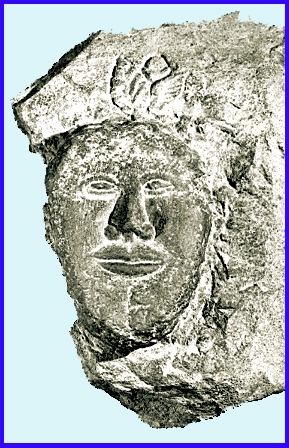
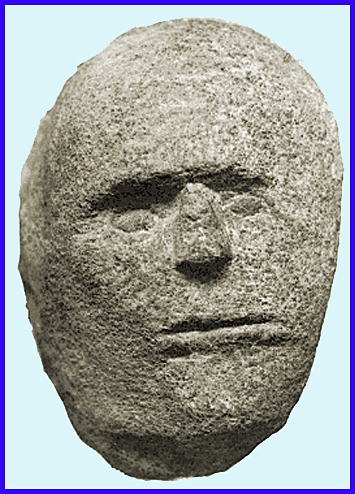
Wuthenau (1969) emphasized that the individual and ethnic characteristics of
the human face are something that no one could invent by accident. Moreover, with the most elementary logic
and to all artistic experience an Amerindian could not depict in a masterly
way the head of an African, Asian or European without missing a single
characteristic, unless he had actually seen such a person. The wide scale destruction of historical documents in
America by the Aztecs, who strove to rewrite history in their own image, and
by European invaders after the Conquest, has contributed to our present
limited knowledge of Pre-Columbian history in America. Foreign diseases, such as smallpox,
measles and whooping cough, decimated the native populations in Mexico alone
by an estimated 86% by 1700 AD (Coe 1994).
Certainly, such high mortality contributed to a great reduction of
ethnic diversity in America.
Continuing to ignore the many authors cited herein who have
painstakingly strived to record remnants of this history is unconscionable in
view of the fact that their evidence for Pre-Columbian contact is
strong. Recovered artifacts are
scattered in museums and private collections around the world where they are
not always generally accessible. The
chronological assemblage herein of some of the evidence for Pre-Columbian
contacts in America should stimulate additional searches and a broader
discussion of the subject. This in
turn may lead to new perspectives in our knowledge of ethno-historical events
and human population migrations. [Also see Album] ------------------------------------------------------------------------------- Attachment #1 (FURTHER
DETAIL)
As of January 2018 there have been few implements found in the
Americas that date from the Bronze Age.
(Please see Discussion) Nevertheless, Fell
(1982) noted that several outstanding facts become increasingly apparent from
various epigraphic expeditions. He
stated, "One is that we have greatly underrated the achievements of the
Bronze Age peoples of northern Europe.
We have long known, from their conspicuous carvings that constitute
the rock art of the Bronze Age, that the North Sea and the Baltic were the
home waters of fleets of ships. What
we have failed to realize is that those same ships and characteristic Bronze
Age style, are also depicted on the rocks and cliffs of the maritime regions
of eastern North America. And now it
is also apparent that these same matching petroglyphs, on both sides of the
Atlantic, are also accompanied by readable texts cut in ancient scripts that
are likewise found on either side of the Atlantic," (Also see Colonization). The voyages
occurred just as the Iron Age was beginning, so that the explorers might have
brought with them implements of iron instead of bronze (see Picture), and most would have
probably rusted away.
What this means, of course, is that the ancient
shipwrights constructed sound vessels, whose skippers and crews sailed them
across the ocean, thereby fulfilling their builders' dreams. Flotillas of ancient Norse, Baltic, and
Nordic (often erroneously referred to as Celtic—see Celts) ships each summer
set their prows to the northwest, to cross the Atlantic, to return later in
the season with cargoes of raw materials furnished by the Algonquians with
whom they traded. To make these
crossings they depended in part upon the sea roads that had been opened up by
the amelioration of the climate at the peak of the Bronze Age. [See Climate] As oceanographers have inferred, the polar
ice melted then, and the favorable westward-flowing air and water currents
generated by the permanent polar high now became available to aid in the
westward passage. The return voyage,
as always, could be made on the west wind drift, in the latitude of around
40-deg. North Latitude, as Columbus rediscovered. While these Norse traders opened up the northern parts of North
America, other sailors from the Mediterranean lands were doing similar
things... but their outward voyage lay along the path that Columbus employed,
utilizing the westward-blowing trade winds, found at latitudes below 30-deg.
N. Both sets of navigation, though
employing different outward routes, were obliged to use the same homeward
track, that of the west wind drift in middle latitudes. Along this common sea road the sailors of
the two different regions would occasionally meet, thus prompting
intercultural exchanges between the Baltic lands and North Africa, as Fell
(1982) had inferred previously. At least twice since the close of the Stone Age, conditions
have favored such events. The first
occurred during the warm period of the middle Bronze Age. Then the world's climates cooled again,
and the northern route to America became too ice-bound and too dangerous to
attract adventurers in that direction any longer [see Climate]. It remained thus until about AD 700, when
once more the earth's climate ameliorated.
Once again the northern icecap melted and the polar seas could support
navigation that made use of the polar high.
Once more mariners came to northeastern America, this time under a
name by which they are known in history--The
Vikings. Yet, as the inscriptions show, these Vikings were not just
Norsemen, they included as before men from the Baltic lands, Lithuanians and
Latvians, as well as peoples from Ireland and probably also Wales. After AD 1,200 the earth grew colder
again, the thousand vineyards of William the Conqueror's England died out,
and Normans turned their attention to the south of Europe to bring in their
Malmsey wines, no longer fermented in England, where no vineyards now
survived. The old routes to America
were deserted, and that western land lay ignored by Europe until the voyage
of Columbus once more awakened the cupidity of monarchs who, by this time,
now controlled large populations of Europe.
This time the full force of European exploitation fell upon the
Amerindians, and the age of American isolation had ended.
Another noteworthy fact is that the ancient Europeans were not
barbarians. They not only spoke in
the chief dialects of the Indo-European tongues, but already by late
Neolithic times, the Europeans could write. The languages they wrote now prove to have
been comprehensible to us as representing the principal tongues of modern
Europe: Teutonic, Baltic, Celtic, and
Basque. Yet, another surprising
discovery is due to Professor Linus Brunner, who announced in 1981 the
occurrence of Semitic vocabulary in the newly identified Rhaetic language of ancient Switzerland.
The heretofore mysterious people, to whom the archeologists have
attached such names as 'Beaker Folk,'
'Bell-beaker People,' and so
on, now prove to be Europeans of presently existing stocks. They spoke in early variant forms of
languages that we can see as related closely to the classical Teutonic,
Norse, and other tongues of Europe at the time of the Romans. The inscriptions found on their artifacts
prove this. That it was not
understood before is simply because archeologists have mistaken the writing
for decorative engraving. When a loom
weight has inscribed upon it the word warp,
it is obvious that this is a purely practical identification label for a
weaver. Decorative it may be, but let
us not overlook the fact that such a label tells us immediately the
linguistic stock of the person who engraved it. Moreover, of course, it certifies that the engraver belonged to
a literate society. The Pre-Christian
languages that were spoken were apparently all very closely related to a most
ancient form, West African (see Migrations for a more extensive
treatment of this subject). The
Basque Language apparently survives as a close approximation of ancient West
African. When we examine the rock and cliff
inscriptions of Scandinavia, we discover that the 'meaningless' decorations
beside their ship carvings are none other than a readable comment in Baltic
speech. They are appropriate to the
scene depicted, and we know at once that the designer was familiar with the
language spoken by the ancestors of the people who still live along the Baltic
coasts today. They were known as Balts.
Let us recognize this simple fact, and call them by their proper
names. In addition, when we find very
similar, and similarly lettered, engravings on North American rocks, it is
our obligation to recognize their European origins, and to call them by their
proper names too. see Bibliography
for citations noted in this section. |